
Smartraveller (2026) is the Australian Government’s official source for travel advice, safety information and consular guidance for Australians travelling overseas. Travelling abroad is exciting, but good preparation can make a major difference when plans change unexpectedly. The Travel Safety Australia website is published by the Australian Department of Foreign Affairs and Trade (DFAT) and helps travellers understand security conditions, local laws, health considerations, entry requirements and other risks before and during their trip.
The Smartraveller website is useful for Australian citizens, dual nationals, permanent residents, students, working holidaymakers and others planning international travel. Travellers can check destination-specific advice before booking or leaving Australia and stay informed through travel alerts and subscription updates. These resources can help Australians make better-informed decisions and understand what consular assistance may be available if unexpected problems occur overseas. Visit Homepage
What Is Smartraveller and Why Does It Matter?
Smartraveller is the Australian Government’s travel advisory and consular information service. Its purpose is not to tell every traveller where they should or should not go, but to provide reliable information that helps people assess overseas risks for themselves.
The platform brings together destination-specific advice in one place. Instead of relying only on general travel blogs or social media posts, travellers can check government guidance about security conditions, health risks, natural disasters, civil unrest and local laws.
The information is particularly valuable before departure. Conditions in another country can change quickly, so checking the relevant destination advice shortly before travelling is a sensible part of trip preparation.
Who Can Use Smartraveller?
The service is primarily designed around Australians travelling or living overseas, including:
Different travellers can face different practical issues. For example, dual nationals may need to understand foreign entry and exit rules, while students may need information about insurance, employment restrictions and local laws.
What Information Does Smartraveller Provide?
The Smartraveller website organises travel information around the issues that can affect Australians abroad. Destination pages can help users investigate the overall security situation as well as more specific concerns.
Safety and Security Information
Travel advice can highlight risks such as crime, terrorism, civil unrest, political instability, conflict and other security concerns. Natural disasters and emergency situations may also affect the advice provided for a destination.
Reading the security information before travelling helps you understand whether normal precautions are sufficient or whether additional planning is necessary.
Health Considerations
Health information can be important when travelling to places with different disease risks, healthcare systems or medication rules. Travellers should consider their own circumstances and investigate whether medical preparation is required before departure.
People who regularly take medication should also check whether medicines can legally be carried into their destination. Local rules can differ considerably between countries.
Local Laws and Customs
A law that seems unfamiliar or unusual to an Australian traveller may still be legally enforceable overseas. Travel Safety Australia provides information about important local laws and customs so travellers can identify potential problems before arriving.
This section deserves particular attention when travelling to countries with strict rules concerning behaviour, photography, alcohol, drugs, dress, public conduct or other activities.
Entry, Visa and Travel Requirements
Destination information can also help travellers identify issues surrounding visas, passports and entry requirements. However, travellers should confirm final immigration requirements with the relevant foreign government or official diplomatic authority before departure.
Requirements can change, and airlines may also check documentation before allowing passengers to board.
How to Register for Smartraveller Travel Updates
Step 1: Open Smartraveller
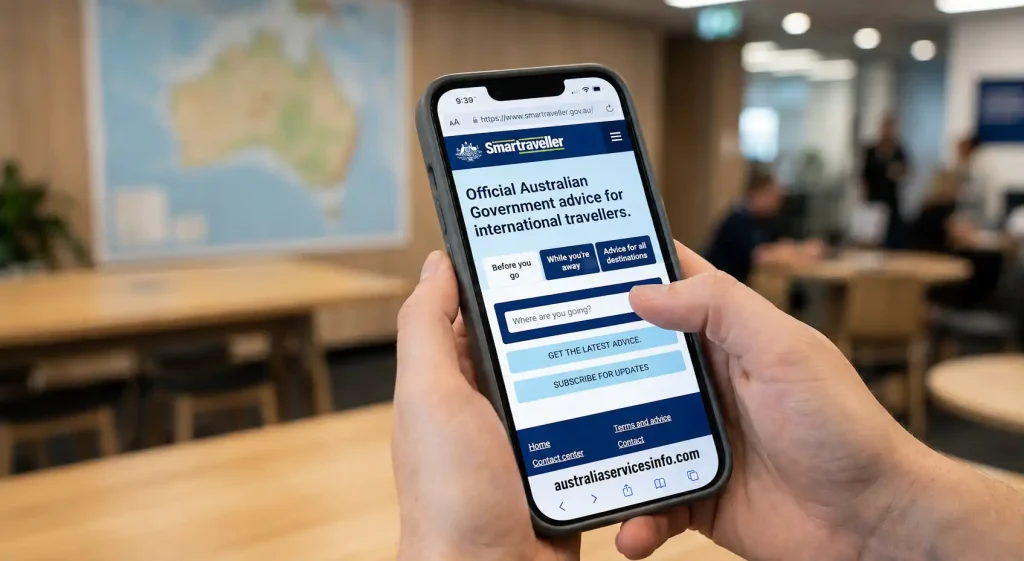
Open the Smartraveller website and select the “Subscribe” option.
Step 2: Enter Your Details
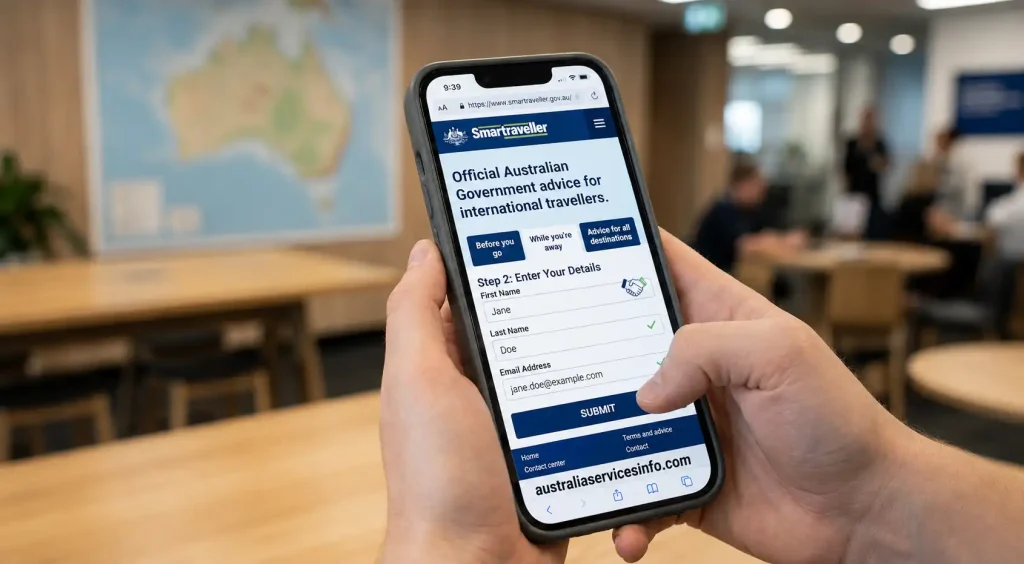
Enter your full name and active email address. You will receive a confirmation message at this email address.
Step 3: Select Your Destinations
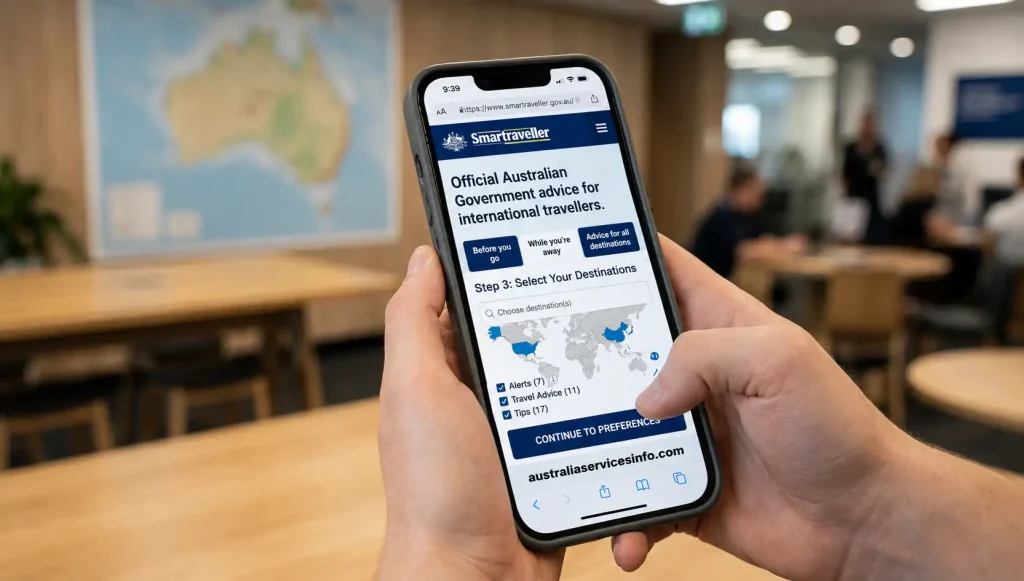
Select the countries or territories for which you want to receive travel updates.
Step 4: Submit Your Subscription
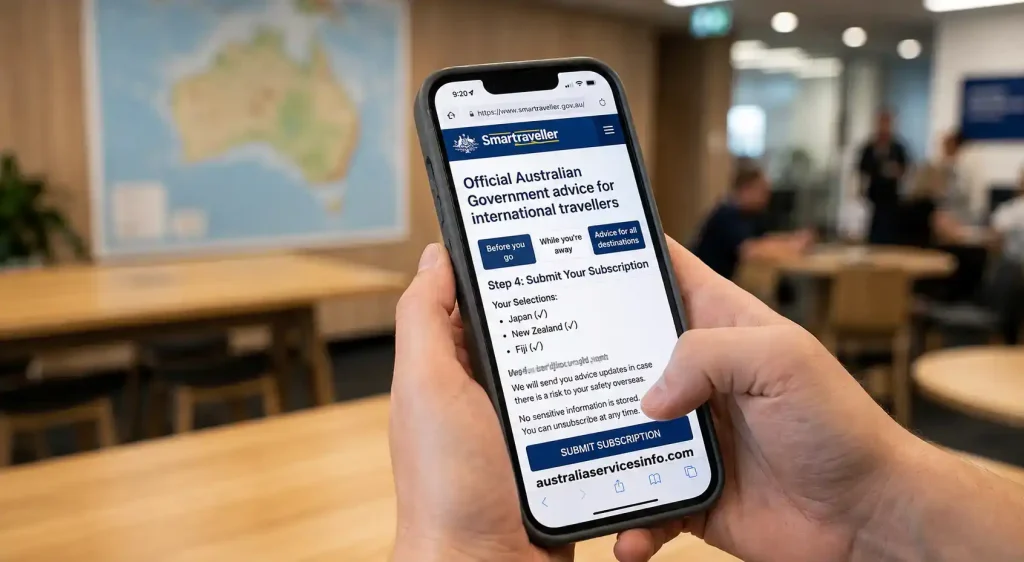
Review your entered information and selected destinations, then submit your subscription request.
Step 5: Confirm Your Email
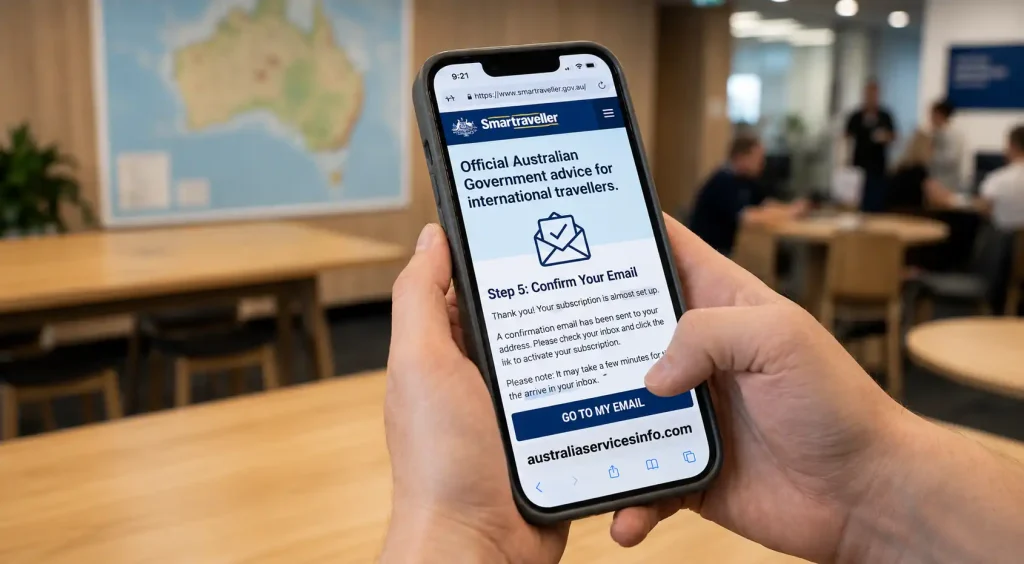
Check your email inbox and click the link in the Smartraveller confirmation email to activate your subscription.
Understanding the Four Smartraveller Advice Levels
One of the most important parts of Smartraveller travel advice is the four-level system. Each destination is assigned an advice level intended to communicate the general level of risk and the action travellers should consider.
| Advice Level | Government Guidance | What It Means |
|---|---|---|
| Level 1 | Exercise normal safety precautions | The overall risk is broadly comparable with that of a major Australian city. Normal awareness and sensible precautions are recommended. |
| Level 2 | Exercise a high degree of caution | Additional risks may exist because of crime, civil unrest, health concerns or other circumstances. Travellers should monitor developments carefully. |
| Level 3 | Reconsider your need to travel | The destination presents significant risks. Non-essential travel may need to be postponed or reconsidered. |
| Level 4 | Do not travel | Extremely serious risks may exist, including active conflict, severe terrorism or other major threats. DFAT’s ability to provide assistance may be severely limited. |
Level 1: Exercise Normal Safety Precautions
Level 1 indicates that travellers should follow ordinary safety practices. It does not mean that a destination is completely risk-free.
Basic precautions still matter. Keep important documents secure, remain aware of your surroundings, follow local laws and take sensible steps to protect personal belongings.
Level 2: Exercise a High Degree of Caution
Level 2 means travellers should take greater care than they normally would. Circumstances could include elevated crime, political demonstrations, health concerns or other security issues.
Before travelling to a Level 2 destination, read the available advice carefully and continue monitoring reliable updates. Conditions can change, particularly during periods of political or social instability.
Level 3: Reconsider Your Need to Travel
Level 3 signals a substantially higher level of risk. Travellers should carefully consider whether the journey is necessary and whether postponing the trip would be safer.
Insurance is also an important consideration. Depending on the circumstances and policy wording, standard travel insurance may not cover travel to destinations subject to serious government warnings.
Level 4: Do Not Travel
Level 4 represents the highest travel advice category. It is used where extremely serious dangers may exist, such as war, active conflict or severe terrorism threats.
Travellers should not treat Level 4 advice as a minor warning. In these circumstances, DFAT may have very limited ability to provide consular assistance, especially if normal diplomatic or transport services are disrupted.
How to Check Travel Advice for Your Destination
Checking your destination before departure is one of the most useful ways to use Smartraveller. The process is straightforward and can be repeated whenever you need to review changing conditions.
Step 1: Find Your Destination
Open the Smartraveller homepage and locate the destination search function. Enter the country or territory you plan to visit, such as Japan, Indonesia or France.
Select the relevant destination from the available results. If your journey includes multiple countries, check each destination separately rather than assuming that neighbouring countries have identical risk levels.
Step 2: Check the Advice Level First
Once the destination page opens, look at its current travel advice level. This gives you an immediate indication of the overall risk assessment.
Do not stop at the coloured level or headline. Read the explanation beneath it because different regions, cities or circumstances can have specific risks that may not be obvious from the overall rating.
Step 3: Read the Main Travel Sections
Work through the available information on safety, local laws, health and travel requirements. Pay attention to warnings that directly relate to your itinerary.
If you plan to drive, hike, work, study, attend large events or visit remote areas, look for information that could affect those activities.
Step 4: Review the Advice Again Before Departure
Travel conditions can change between the time you book a trip and the day you leave. A destination that looked suitable several months earlier may have a different risk profile closer to departure.
Make checking Smartraveller travel advice part of your final travel preparation rather than treating it as a one-time task.
Why Travel Advice Levels Should Be Taken Seriously
The four-level system gives travellers a quick starting point, but the detailed information is equally important. Two people visiting the same country may face different risks depending on where they go, what they intend to do and how long they plan to stay.
For example, a traveller staying in a major city for a short business trip may have a different risk profile from someone travelling independently through remote areas. Reading the destination details allows you to make decisions based on your actual plans.
The advice can also influence practical decisions about insurance, accommodation, transport and emergency preparation. Checking it early gives you more time to change plans if necessary.
Stay Updated With Smartraveller Alerts
Travel conditions can change with little notice, which is why checking the destination advice once is not always enough. Smartraveller allows travellers to subscribe to updates for destinations they are visiting or monitoring.
These notifications can be useful when there is a significant change in travel advice, a developing emergency or another event that may affect Australians overseas. Subscribing before departure gives you another way to keep track of important developments.
How to Subscribe to Travel Updates
The subscription process can be completed through the Travel Safety Australia website.
- Open the Travel Safety Australia website and select the subscription option.
- Enter your name and email address.
- Select the countries or territories you want to monitor.
- Submit the subscription request.
- Check your email and confirm the subscription using the verification message.
Choose every destination that matters to your journey. If you have a transit stop in another country, it can also be sensible to monitor that location rather than focusing only on your final destination.
Why Email Alerts Are Useful
A traveller may plan a trip months before departure, while the security situation can change much sooner. Email updates help reduce the chance of relying on outdated information.
Alerts should not replace checking the full destination advice. Instead, they work as an additional layer of awareness, particularly for travellers visiting destinations where conditions can change quickly.
Smartraveller Advice for Different Types of Travellers
Not every traveller has the same needs. Travel Safety Australia provides information relevant to particular groups whose circumstances can create additional considerations overseas.
Students Travelling Overseas
Students may spend weeks or months outside Australia, making preparation especially important. They should understand local laws, insurance requirements, accommodation arrangements and any restrictions that apply to study or employment.
Students should also keep copies of important documents and know how to obtain assistance if their passport, health or personal safety becomes an issue.
Working Holidaymakers
Working holidaymakers need to consider both travel and employment rules. Local labour laws can differ from Australian requirements, so travellers should understand the rules that apply in their destination before accepting work.
Insurance should also be checked carefully to make sure the planned activities and employment circumstances are covered.
Dual Nationals
Dual nationals may face rules that are different from those applying to other Australian travellers. Some countries may treat a dual national primarily as a citizen of that country when they enter or remain there.
Potential issues can include entry and exit requirements, compulsory military service and limits on Australian consular assistance. Dual nationals should investigate these matters before travelling.
Travellers With Medical Needs
Travellers who take prescription medicines or require ongoing medical care need additional preparation. A medicine that is legal in Australia may be controlled or restricted elsewhere.
Before leaving, check the destination’s rules for bringing medication into the country and consider what documentation may be required. Travellers should also think about access to suitable healthcare if their normal treatment is unavailable.
Seniors and Travellers Requiring Extra Support
Older travellers or people with specific mobility, medical or accessibility requirements should assess whether their destination can meet their needs.
Planning should cover medication, healthcare access, travel insurance, transport and emergency contacts. Extra preparation can make an overseas trip considerably easier if circumstances change.
What to Know About Consular Assistance Overseas
One of the most important functions associated with Smartraveller is helping Australians understand consular assistance. The Australian Government can provide certain forms of support when Australians experience serious difficulties overseas, but consular assistance has clear limits.
If an Australian citizen faces an urgent situation abroad, such as serious illness, arrest, a natural disaster or the loss of a passport, Australian diplomatic or consular officials may be able to provide appropriate assistance.
The level of assistance available depends on the circumstances and the location. During major crises, access may be difficult or restricted.
Contacting the Consular Emergency Centre
For urgent consular assistance, the information supplied for this guide lists the following contact channels:
These details should be saved before departure rather than searched for after an emergency has already occurred.
Important: Emergency contact information should be checked against the current Australian Government guidance before relying on it, as contact arrangements can change.
What Australian Consular Officials May Be Able to Do
Consular assistance is designed to help Australians deal with serious overseas problems within the limits of Australian law and government responsibilities.
Depending on the circumstances, officials may be able to:
The purpose is to provide appropriate government assistance, information and support rather than take control of a traveller’s personal situation.
What Consular Assistance Cannot Do
Travellers should understand the limits before assuming that the Australian Government can resolve every problem overseas.
Australian officials generally cannot:
Local laws continue to apply even when an Australian citizen is involved. Consular officials cannot simply cancel a foreign legal process because someone is an Australian national.
Why This Distinction Matters
Knowing these limits can prevent unrealistic expectations during an emergency. A traveller who understands what assistance is available can respond more effectively and seek appropriate local services when required.
For example, someone arrested overseas may receive information about local legal services and consular processes, but Australian officials cannot simply order authorities to release that person.
Preparing for an Emergency Before You Leave
Emergency planning is often overlooked because travellers naturally focus on flights, accommodation and sightseeing. A few simple preparations can make a major difference if something goes wrong.
Before departure, consider keeping the following information accessible:
Keep digital copies securely available, but do not depend entirely on your phone. A lost, damaged or stolen device could make important information difficult to access.
Build a Practical Pre-Departure Plan
Using Travel Safety Australia as part of your preparation works best when it is combined with other sensible travel checks. Rather than leaving everything until the night before departure, work through the major requirements in advance.
Passport and Documentation
Check that your passport meets the requirements for your destination and that you have enough validity remaining for the planned journey.
The information supplied for this guide recommends ensuring at least six months of passport validity beyond the planned return date. However, passport validity requirements can differ by destination, so travellers should confirm the exact rule that applies to their trip.
Keep copies of your passport and other essential documents in a secure location.
Travel Insurance
Comprehensive travel insurance is an important part of overseas preparation. Do not simply choose a policy based on its price.
Review whether it covers the activities you intend to undertake and whether there are exclusions relating to medical treatment, evacuation, existing medical conditions or destinations carrying higher government travel warnings.
A policy may not provide cover in every situation, so read the terms before purchasing.
Visa and Entry Requirements
Do not assume that having a valid Australian passport automatically means you can enter another country without additional requirements.
Check the destination’s official immigration or embassy information for current visa, entry and documentation rules. This is especially important for longer stays, study, employment or transit arrangements.
Travel Alerts
Subscribe to relevant Travel Safety Australia updates before leaving Australia. Include every destination that forms part of your journey, including countries where you have a planned transit stop.
This gives you a better chance of noticing a significant change before or during your trip.
Emergency Contacts
Save emergency contact information in your phone before departure. It is also wise to keep a written copy somewhere secure in case your device becomes unavailable.
Your preparation should include both local emergency services and Australian consular contacts where appropriate.
A Smartraveller Checklist for International Travel
Use the following checklist as a final preparation review:
| Travel Task | What to Check |
|---|---|
| Destination advice | Current travel advice level and detailed warnings |
| Passport | Validity and condition |
| Visa | Current entry and visa requirements |
| Insurance | Medical, evacuation, activities and relevant exclusions |
| Health | Medication rules and healthcare planning |
| Local laws | Important restrictions and customs |
| Alerts | Email updates for each relevant destination |
| Emergency contacts | Local services and Australian consular contacts |
| Documents | Secure copies of passport and important records |
| Itinerary | Transport, accommodation and transit arrangements |
This checklist is most useful when completed before the final days of your trip. If something is missing, you still have time to resolve it.
Common Mistakes Travellers Should Avoid
A good travel plan can still fail if important details are overlooked. Several mistakes are particularly easy to make.
Checking Travel Advice Only Once
Conditions can change after flights and hotels have been booked. Review the destination advice again close to departure and continue monitoring it during longer trips.
Ignoring Transit Countries
Travellers sometimes research only their final destination. Transit locations can have their own entry rules, security conditions and disruptions, so include them in your planning.
Assuming Travel Insurance Covers Everything
Insurance policies contain exclusions and conditions. Travellers should understand what is covered before relying on a policy during an emergency.
Ignoring Local Laws
Being unfamiliar with a local rule does not necessarily protect a traveller from its consequences. Read the relevant local-law information and respect regulations throughout the trip.
Depending Only on Social Media
Social media can spread information quickly, but it may also contain incomplete or outdated claims. Government travel advice should be one of the main sources used when assessing official overseas risks.
How to Use Smartraveller More Effectively
The strongest approach is to treat Travel Safety Australia as an ongoing travel-planning resource rather than a website you visit only when something goes wrong.
Start by checking your destination well before departure. Review the travel advice level, read the detailed warnings, investigate health and local-law information, confirm entry requirements with the relevant authorities, and arrange suitable insurance.
After that, subscribe to updates and keep emergency information accessible. If your itinerary changes, check the advice again for the new location.
Frequently Asked Questions About Smartraveller
Final Thoughts
Smartraveller is an important resource for Australians preparing to travel overseas because it brings government travel advice, destination risks, local-law information, health considerations and consular guidance together in one place.
The best way to use it is to check your destination early, understand its current advice level, read the detailed warnings and review the information again before departure. If your itinerary includes several countries, check each destination and any important transit locations separately.
Travel insurance, valid documents, visa preparation, emergency contacts and appropriate health planning should also form part of your preparation. Staying subscribed to relevant travel updates can help you remain aware of important changes while you are abroad.
A few minutes spent reviewing Travel Safety Australia travel advice before a trip can help you understand potential problems before they become emergencies. For Australian travellers, making this check part of every international travel plan is a practical step towards safer and better-informed travel.
READ MORE
Blooket (2026): Complete Guide to Games, Login, Hosting, Joining & Learning