

The Student Portal on Study Australia gives international students a useful starting point for planning their education in Australia. Before choosing an Australian university or another education provider, students can research courses, check entry requirements, explore scholarships, prepare required documents and understand the student visa process. It is also helpful to consider the cost of living in Australia when comparing study destinations and planning a realistic budget.
Study Australia is the official Australian Government website for people interested in studying and training in Australia. The platform brings together information about Australian education, courses, study options, scholarships, accommodation and visa planning, making it easier for international applicants to research their choices before contacting an education provider. Visit Homepage
What Is the Study Australia Student Portal?
The Student Portal is the central online resource provided through Study Australia for people researching education opportunities in the country. It is managed by the Australian Trade and Investment Commission (Austrade) and provides information covering courses, institutions, scholarships, living arrangements, visas and preparation for arrival.
Rather than functioning as a university enrolment account, the Study Australia Portal works mainly as an information and planning hub. Students can use it to research suitable programmes and then move to the relevant education provider when they are ready to apply.
The platform can be useful for several groups, including:
One important point is that finding a course through Study Australia does not itself create an enrolment. Admission is handled by the relevant education provider, while visa applications are dealt with through the Australian Department of Home Affairs.
Why Use the Study Australia Student Portal?
Planning an overseas education can become confusing when information is collected from many unrelated websites. The Student Portal gives students a starting point for understanding the Australian education system before they begin contacting institutions.
Its value is not limited to course discovery. A prospective student can use the available resources to consider where to study, what type of qualification may suit their goals, how much living in Australia could cost and what preparation may be needed before travelling.
The main areas worth exploring include:
| Area | What Students Can Research |
|---|---|
| Course search | Courses, providers, study levels and locations |
| Scholarships | Available funding and scholarship opportunities |
| Living costs | Budget planning for different Australian locations |
| Career planning | Study areas related to interests and career directions |
| Visa information | Student visa requirements and travel preparation |
| Moving to Australia | Practical information for settling in after arrival |
This makes the Student Portal particularly useful during the early research stage, when students are still comparing alternatives rather than submitting an application.
Finding the Right Course
One of the most useful parts of the Study Australia Portal is its course-search functionality. Instead of selecting an institution immediately, students can begin with the subject they want to study and narrow the available options according to their circumstances.
For example, someone interested in Data Science can search that subject and then compare relevant study options. A student considering Nursing or Engineering can follow the same approach.
Use Filters to Narrow Your Search
Course research becomes easier when you apply suitable filters rather than browsing a large list without a clear plan. Depending on the available search options, students can consider:
A useful approach is to create a shortlist rather than immediately choosing the first course that appears. Compare several providers and look carefully at the qualification, duration, location, estimated fees and admission conditions.
Check CRICOS Registration
CRICOS registration is an important consideration for international students. The Commonwealth Register of Institutions and Courses for Overseas Students identifies Australian education providers and courses that are available to overseas students.
Before relying on a course for student visa planning, check its current registration status and confirm the information with the education provider. This simple verification can help prevent problems later in the application process.
Exploring Scholarships Before Applying
The Study Australia Portal can also help prospective students investigate scholarship opportunities. Financial assistance may come from universities, education providers or government-related programmes, depending on eligibility and availability.
Scholarship conditions can differ considerably. Some awards may focus on academic achievement, while others can have requirements connected with a particular course, nationality, institution or level of study.
When comparing funding opportunities, pay attention to:
Do not assume that every scholarship covers full tuition or living expenses. Read the conditions carefully and confirm the current terms with the organisation offering the award.
Planning Your Australian Study Budget
Tuition is only one part of the financial picture. Students also need to consider accommodation, food, transport, utilities, study materials and other everyday expenses.
The Study Australia Portal provides planning resources that can help applicants think about living costs according to location and lifestyle. This is useful because expenses can vary between Australian cities and regions.
A realistic budget should include both regular and occasional costs. For example, accommodation may be the largest ongoing expense, while transport, groceries, mobile services and study-related purchases can add up throughout the year.
A Practical Budget Checklist
Before committing to a course, estimate:
- Tuition and other education charges
- Accommodation expenses
- Food and household costs
- Local transportation
- Health insurance
- Study materials and personal expenses
- Initial arrival and settlement costs
Having this information early can make it easier to compare two otherwise similar courses in different locations.
Using Career and Study Planning Tools
Not every student begins with a fixed career decision. The Study Australia Portal includes resources that can help people connect personal interests with possible study areas and future career directions.
A career-matching approach can be useful when several subjects appear attractive. Instead of asking only, “Which course is popular?”, consider whether the subject matches your interests, previous education and longer-term plans.
For international students, this type of planning is especially valuable because studying overseas represents a major financial and personal commitment. A course should make sense academically and fit the student’s intended career pathway.
Key takeaway: Research the subject, qualification, provider, location and future career direction together rather than treating course selection as a single decision.
Preparing Your Application Through the Student Portal
Once you have identified suitable courses, the next stage is to check admission requirements and understand how the application process fits together. The Study Australia Portalcan help you prepare, but the actual admission decision remains with the education provider.
Check Entry Requirements Carefully
Every institution sets its own admission requirements. These can depend on your previous qualification, the level of study, the chosen subject and your English-language ability.
Before applying, review the provider’s requirements for:
English-language evidence may involve tests such as IELTS, PTE or TOEFL where required by the provider. The exact score should always be confirmed with the institution because requirements can vary between courses.
Do not rely on a general score found elsewhere. A university may have different requirements from another provider, even when both offer courses in a similar subject.
Submit Your Course Application
After selecting a suitable programme, follow the education provider’s application instructions. Some institutions accept applications directly, while others may allow students to apply through an authorised education agent.
The Study Australia Portal helps with research, but it does not replace the provider’s admissions system. When you reach the application stage, carefully follow the instructions supplied by your chosen institution.
You may need documents such as:
Make sure names and dates are consistent across your documents. If a provider asks for certified, translated or additional evidence, follow those instructions before submitting the application
How to Register on the Student Portal
Step 1: Visit the Official Study Australia Website
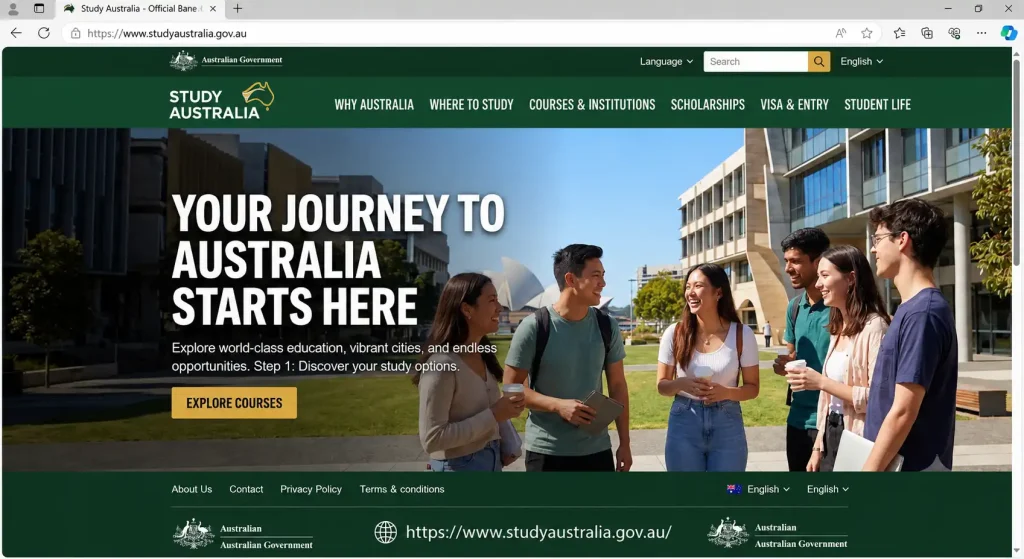
Open the official Study Australia website and find the available student account or registration option.
Step 2: Select the Register or Sign Up Option
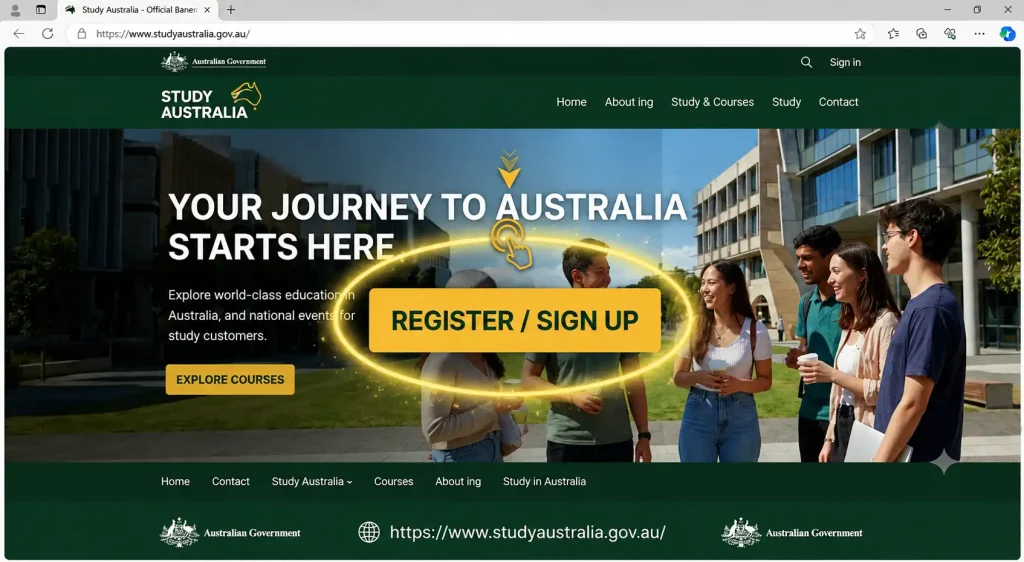
Click Register, Sign Up, or the relevant account-creation option to start the registration process.
Step 3: Enter Your Required Information
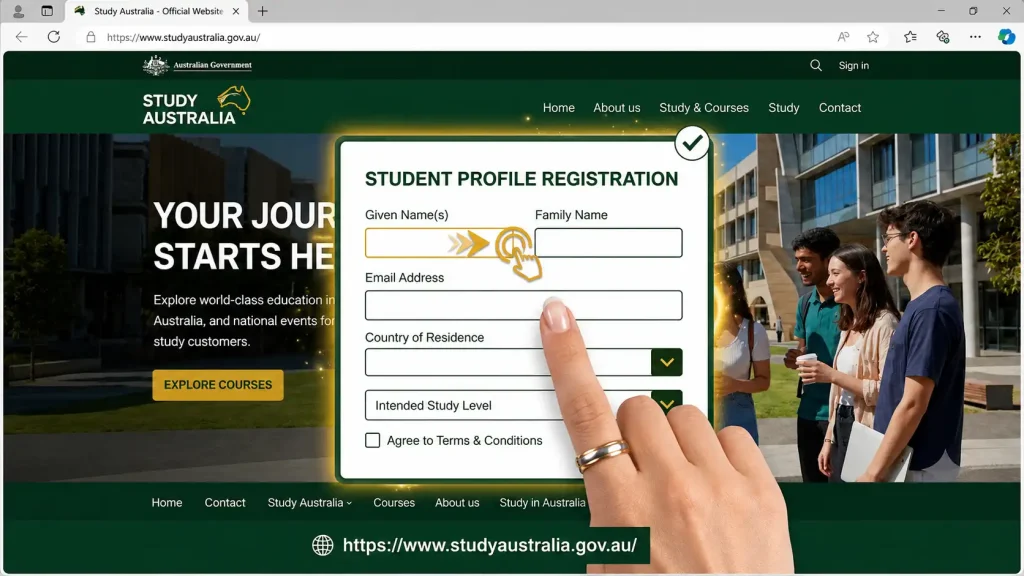
Provide the requested details, such as your name, email address and other necessary information.
Step 4: Verify Your Email Address
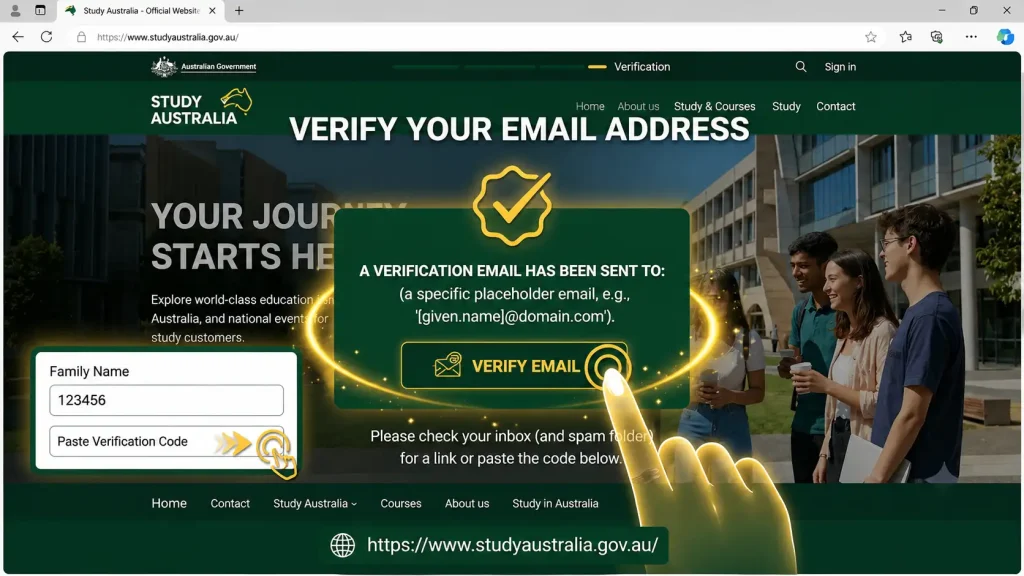
Check your email inbox for a verification message and follow the instructions to confirm your account.
Step 5: Log In and Complete Your Profile
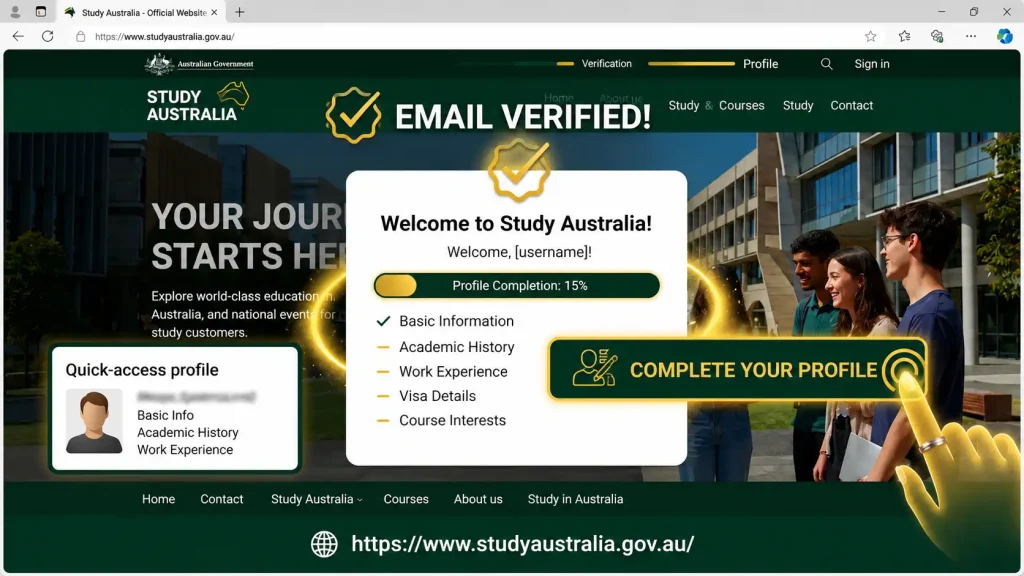
Use your registered login details to access your account and complete any available profile or study preferences.
Understanding the Offer and Confirmation of Enrolment
A successful applicant may receive a Letter of Offer from the education provider. This document can explain the course, fees, conditions and other requirements that must be satisfied before enrolment is finalised.
If the offer is conditional, read every condition before accepting it. You may need to provide further evidence or complete another requirement before the institution can confirm your enrolment.
After the required steps have been completed, the provider can issue a Confirmation of Enrolment (CoE). The CoE is an important document for the student visa process because it confirms your enrolment in the registered course.
Before Accepting an Offer
Use this short check:
Course → Conditions → Fees → Acceptance → CoE
Taking a few minutes to review each stage can reduce mistakes later.
Moving From Admission to Student Visa Planning
Getting an offer from an Australian education provider does not automatically mean that you have permission to enter Australia for study. Visa requirements are handled separately by the Department of Home Affairs.
The Student Portal provides general guidance that helps students understand the transition from education planning to visa preparation. Applicants should then use the official Home Affairs information for current visa requirements.
Student Visa Subclass 500
The Student visa (subclass 500) is the main visa pathway for eligible international students studying in Australia. The application involves more than simply attaching a CoE.
Depending on your circumstances, you may need to prepare evidence concerning your identity, health, finances, English ability and genuine intention to study.
Genuine Student Requirement
Applicants should understand the Genuine Student (GS) requirement before preparing their application. The purpose is to demonstrate that studying in Australia is the genuine reason for applying and that the proposed education fits the applicant’s circumstances and future plans.
Your responses should be truthful and supported by relevant information. Think about your previous education, employment or circumstances, why the chosen course makes sense and how it relates to your future goals.
Avoid copying generic statements from other applicants. Your application should accurately describe your own circumstances.
Financial Preparation for Study in Australia
Financial planning deserves attention before lodging a visa application. Students may need to demonstrate that they have access to sufficient funds for the costs associated with studying and living in Australia.
The figures and evidence requirements can change, so applicants should verify the current financial requirements directly with the Department of Home Affairs before applying.
Your planning should take account of more than tuition. Consider:
The Study Australia Portal is useful for understanding general living-cost considerations, while current visa evidence requirements should be confirmed through Home Affairs.
Overseas Student Health Cover
International students generally need Overseas Student Health Cover (OSHC) for the period required under their visa arrangements. Health insurance should therefore be considered as part of the overall cost of studying in Australia.
When arranging cover, check the policy period, provider information and conditions carefully. Keep your insurance documentation with your other visa and enrolment records.
Lodging the Visa Application
Once your documents and enrolment information are ready, eligible applicants can proceed through the Department of Home Affairs online visa application system.
A typical preparation sequence looks like this:
- Select and secure your course.
- Complete the provider’s admission requirements.
- Accept the relevant offer.
- Obtain your CoE.
- Arrange required health insurance.
- Prepare evidence for the visa application.
- Review the Genuine Student requirements.
- Create or use your ImmiAccount.
- Complete the Student visa application.
- Upload the requested documents and provide any additional information required.
The Student Portal can help you understand the broader journey, but visa decisions are made by the Australian Department of Home Affairs.
What to Prepare Before Travelling
Receiving a visa is an important milestone, but preparation should continue before departure. International students need to think about accommodation, money, travel documents and their first few days in Australia.
The Study Australia resources can help you organise this stage without trying to solve everything at the last minute.
Accommodation Planning
Decide where you will stay before travelling whenever possible. Options can include university accommodation, purpose-built student housing, shared accommodation or private rental arrangements.
Compare the total cost rather than looking only at weekly rent. Consider deposits, utilities, internet, transport distance and other charges that may apply.
Location matters too. A cheaper room that requires expensive daily travel may not actually reduce your overall budget.
Documents to Keep With You
Create a secure digital and physical record of important documents. These may include:
Do not place your only copy of important documents in checked luggage.
After Arrival: Your First Practical Tasks
Arriving in Australia marks the beginning of another stage. The Student Portal can help you find guidance for settling into your new environment and understanding practical aspects of student life.
Create a Unique Student Identifier
The Unique Student Identifier, commonly known as a USI, is an important identification number for students undertaking eligible higher education and vocational education or training in Australia.
Students who need one should create it through the official USI service using the required identity information. Keep the number secure because it may be needed for future education records.
Set Up Everyday Services
After settling in, students may need to arrange a bank account, mobile service and local transport. If you intend to work and are eligible to do so, you may also need to understand the process for obtaining a Tax File Number.
Your education provider may offer practical orientation support, so check its student services before making arrangements independently.
Attend Orientation
Orientation or O-Week is often one of the best opportunities to become familiar with your campus. Depending on the institution, activities may include:
Try to attend relevant sessions rather than treating orientation as optional social activity. It can provide information that makes the first semester easier to manage.
Understanding Local Transport
Australia’s public transport systems differ between states and territories. Major cities use different networks and ticketing arrangements, and student concessions may have their own eligibility rules.
For example, students may encounter systems such as Opal in New South Wales, myki in Victoria or Translink services in Queensland. Check the current rules for the state where you will live because concession eligibility is not identical everywhere.
The Student Portal can help you understand the wider relocation process, while local transport authorities provide the most appropriate information for routes, fares and concessions.
Important Things to Check Before Using the Student Portal
The Student Portal is most useful when you already have a clear idea of what you want to study. Before searching, decide your preferred subject, study level, location and approximate budget. This makes it easier to compare suitable Australian courses without wasting time on unrelated options.
Always check the information provided for a course carefully. Look at the qualification level, duration, start dates, location, tuition estimates and entry requirements before adding a programme to your shortlist.
Check CRICOS Registration
International students should pay close attention to CRICOS registration when researching courses. CRICOS provides information about Australian education providers and courses registered for overseas students.
Before making a final decision, confirm that the course you are considering has the appropriate registration and then check the latest information with the education provider. This is especially important when your study plans are connected with a Student visa.
Compare Courses and Providers
The Student Portal allows prospective students to explore different education options, but choosing a course should involve more than looking at its name.
Compare providers according to your academic background, career interests, preferred location and available budget. A course that looks suitable at first may have different entry conditions, fees or study durations from another programme in the same field.
Consider these points before making your shortlist:
Taking notes while comparing programmes can make the final decision much easier.
Finding Scholarships Through the Student Portal
Scholarships can reduce the financial pressure associated with international study. The Student Portal provides resources that can help students search for scholarship opportunities offered by education providers and other organisations.
Every scholarship has its own conditions. Some may be based on academic performance, while others can have requirements relating to nationality, study level, course or institution.
Before applying, check the eligibility criteria, closing date, amount of funding and documents required. Also confirm whether the scholarship covers tuition, living expenses or only a specific part of the study costs.
Planning Living Costs
Studying in Australia requires financial planning beyond tuition fees. Students should consider accommodation, food, transport, health cover, study materials and personal expenses when preparing their budget.
The Student Portal provides cost-of-living information that can help prospective students understand the expenses associated with different Australian locations and lifestyles.
A realistic budget should be prepared before accepting a course. Compare the expected living expenses with your available funds so you have a clearer picture of the total cost of studying overseas.
Preparing for the Student Visa
After selecting a course and receiving the required enrolment documentation, students can begin preparing for the Australian Student visa process.
The Student Portal provides general information about visa and travel preparation, while the Department of Home Affairs handles the actual visa application and decision-making process.
Students should understand the Genuine Student requirement, financial evidence requirements, health insurance arrangements and other documents that may apply to their circumstances.
Student Visa Preparation Checklist
Before submitting a visa application, review:
- Valid passport
- Confirmation of Enrolment (CoE)
- Required financial evidence
- Genuine Student information
- Overseas Student Health Cover
- Academic documents
- English-language evidence where required
- Other supporting documents requested by Home Affairs
Requirements can change, so applicants should check the latest government information before lodging their application.
Planning Your Move to Australia
The Student Portal also provides information that can help students prepare for life after arrival. Planning these practical matters before travelling can make the first few weeks more manageable.
Students should consider accommodation, transport, banking, communication services and orientation arrangements. It is also useful to keep important documents such as your passport, visa information, CoE and insurance details safely available.
Set Up Your USI
Students undertaking eligible higher education or vocational education and training may need a Unique Student Identifier (USI). The USI is used for education records and should be created through the official USI service when required.
Make sure the personal details used to create the USI match your identification documents.
Attend Orientation
After arriving at your institution, take part in orientation or O-Week activities. These sessions can introduce you to the campus, timetable arrangements, student services, academic support and other facilities.
Orientation is also a useful opportunity to understand the rules and services of your education provider before classes begin.
Avoid Mistakes When Using the Student Portal
The Student Portal can make research easier, but students should still verify important information before taking action.
One common mistake is assuming that information found during initial research is automatically the final requirement for an application. Course conditions and government requirements can change, so the education provider or relevant Australian Government department should be checked before submitting documents or making payments.
Another mistake is choosing a course without considering total costs. Tuition, accommodation and daily expenses should be assessed together.
Students should also be cautious about unofficial websites or individuals promising guaranteed admission or visa approval. Use reliable Australian Government and education-provider information whenever possible.
Frequently Asked Questions
Final Thoughts
Student Portal on Study Australia helps international students plan their education journey, from researching an Australian university and comparing courses to checking entry requirements, scholarships and visa information. It is also useful to research the cost of living in Australia early, so students can prepare a realistic budget for accommodation, food, transport and other everyday expenses.
Study Australia is the official Australian Government website for people interested in studying and training in Australia. The Student Portal brings key information about Australian education, study options, scholarships, living arrangements and visa planning together in one place, giving international applicants a practical starting point before contacting an education provider.
READ MORE
myGov Australia (2026): Complete Guide to Login, Services & Account Access
ImmiAccount Login Guide (2026): Complete Registration, Visa Application & Account Management Guide
Service NSW Guide (2026): MyServiceNSW Account, Licences, Rebates & Online Services