

Blooket is a popular way to make ordinary question-and-answer revision more engaging. Rather than completing a standard quiz, students answer multiple-choice questions through interactive game modes that encourage participation, accuracy, and continued play.
The platform is built for students, teachers, and educators who want a browser-based learning experience without installing separate software. On the official Classroom Learning Games website, users can create an account, log in, search for question sets, choose a game mode, and take part in classroom activities. Students looking for Blooket Play can access the game experience, while those searching for Blooket Join can use the joining option to enter an activity hosted by their teacher. Educators can also review reports after a session to see how students performed. visit homepage
What Is Blooket?
Classroom Learning Games is a gamified educational platform that combines multiple-choice review questions with arcade-style gameplay. A teacher can use an existing question set or create one, select a suitable game mode and invite students to participate.
The main difference between Interactive Quiz Gamesand a conventional quiz is what happens after a student answers a question. Correct answers can influence progress within the selected game, while the game itself provides the competitive or strategic element. This creates a learning activity that feels more like playing a game than completing a standard worksheet.
Interactive Quiz Gamesis also flexible enough for different classroom situations. Teachers can run activities live with a class or use asynchronous options for students who need to work independently. The official platform describes its workflow around three basic stages: getting a question set, choosing a game mode, and then playing, learning and analysing the results.
Who Can Use Blooket?
Classroom Learning Games is primarily useful for:
Why Do Teachers and Students Use Blooket?
The appeal of Classroom Learning Games comes from combining learning questions with game mechanics. Students are not simply answering one question after another; their answers can affect what happens during the selected game.
1. Interactive Learning
A Classroom Learning Games activity can make revision more active. Instead of relying only on written exercises, students answer questions while taking part in a themed game.
2. Immediate Learning Feedback
Classroom Learning Games provides feedback during gameplay, while teacher reports can provide a broader view after a session. The official platform says its reports can help educators identify knowledge gaps and understand student progress.
3. Different Game Experiences
One question set can be used with different game modes. This gives teachers the ability to change the classroom experience without necessarily having to create a completely new set of questions.
4. Browser-Based Access
Students can participate through a web browser, making Classroom Learning Games practical for classrooms where learners use computers, tablets or other compatible devices.
5. Rewards and Collectibles
Classroom Learning Games includes collectible characters known as Blooks. Players can build their collection as they use the platform, adding a progression element beyond simply answering questions.
Quick Tip: The strongest Classroom Learning Games activities usually combine good questions with an appropriate game mode. The game should support the learning goal rather than distract from it.
Blooket Account Registration: How to Sign Up
Creating an account is the starting point for users who want access to the platform’s broader features. The official homepage provides Sign Up and Log in options directly from Classroom Learning Games.
Step 1: Open the Official Blooket Website
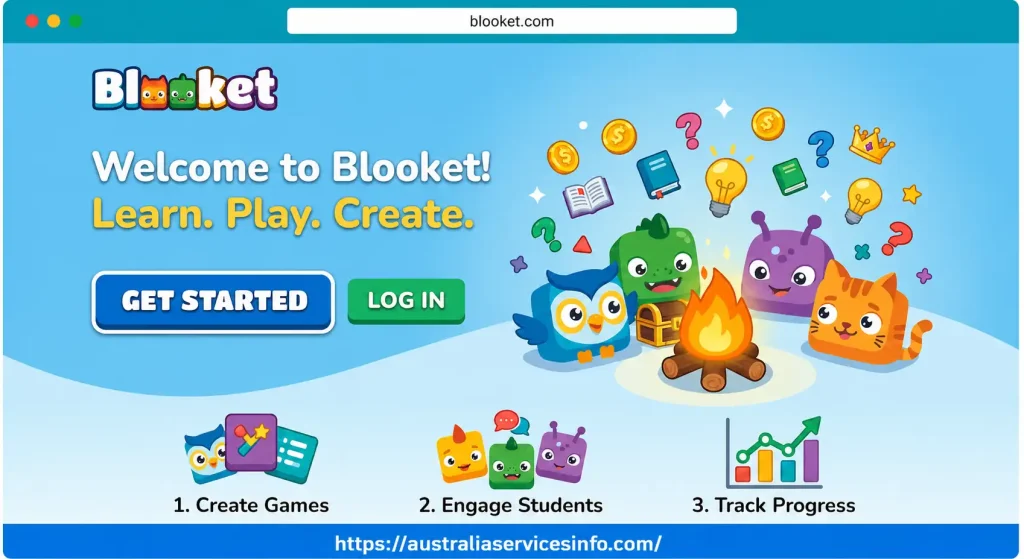
Avoid using unofficial websites when creating or accessing your account. The official homepage is the appropriate starting point for Classroom Learning Games services.
Step 2: Select “Sign Up”

On the Classroom Learning Games homepage, select Sign Up. The official website currently provides a direct sign-up route from its main page.
Step 3: Select Your Registration Method
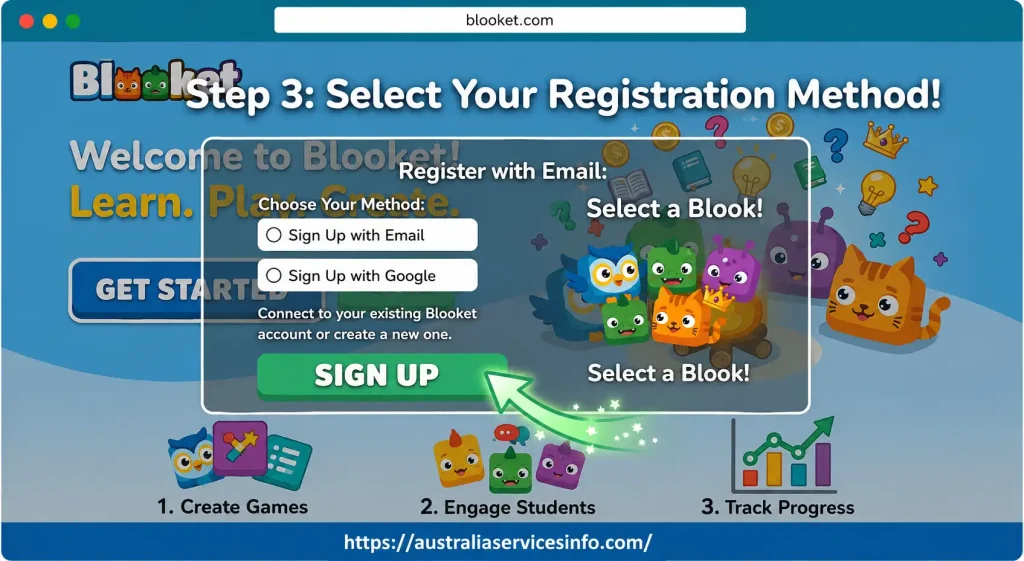
Depending on the available account options, follow the registration method presented on the official Classroom Learning Games sign-up page. Your registration details should be entered carefully so you can access the account later.
Step 4: Choose the Appropriate Account Type
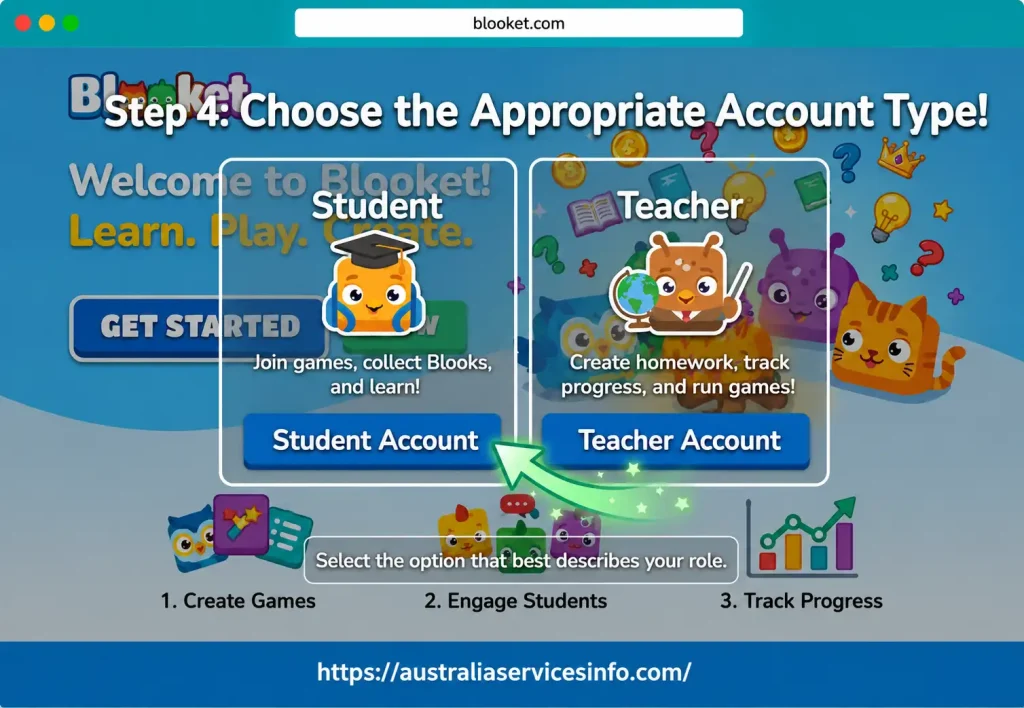
If the registration process asks you to identify how you will use Classroom Learning Games, select the option that matches your role.
A teacher account is intended for educators who want to create or use question sets and host learning sessions. A student account is intended for learners who mainly join activities and manage their own progress.
Step 5: Create Your Username
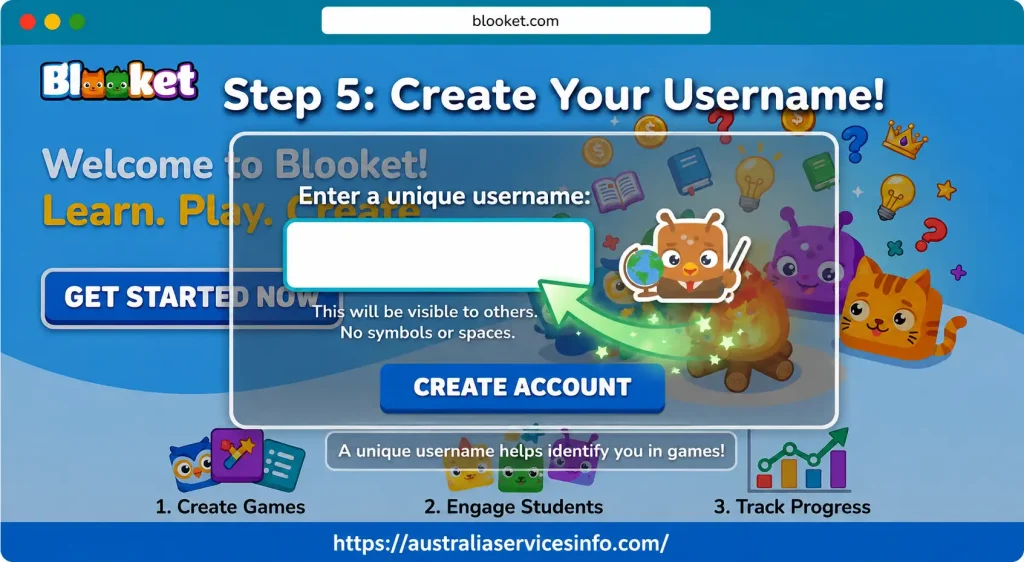
Choose a suitable username or screen name where required. Students should follow any school or classroom naming rules provided by their teacher.
Step 6: Finish Registration
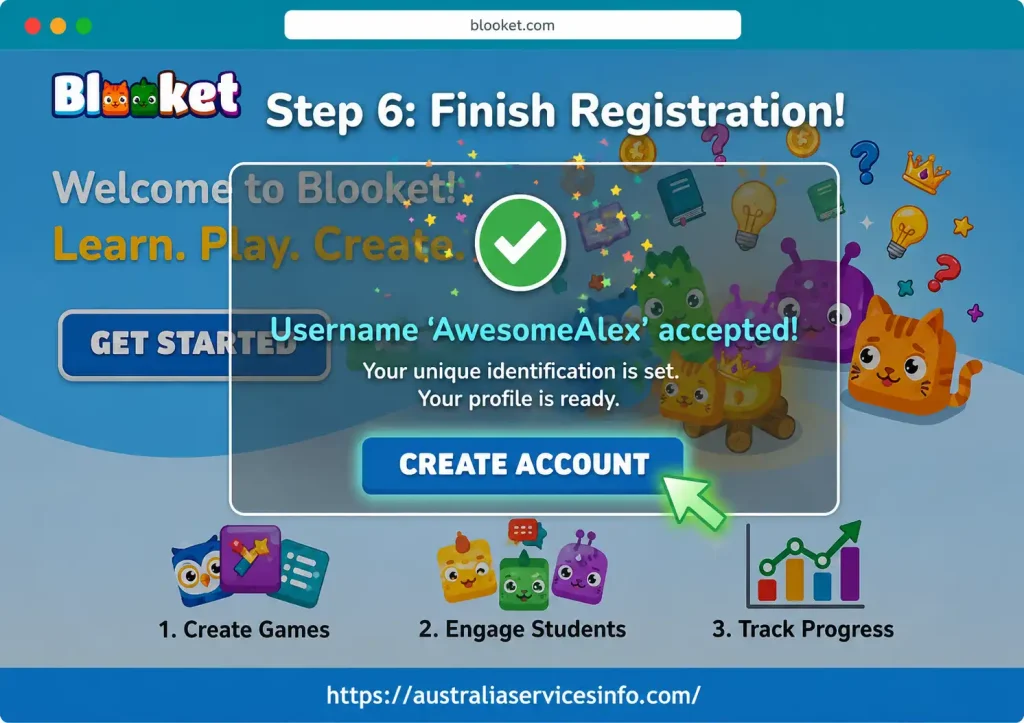
Complete the remaining instructions shown by Classroom Learning Games. Once registration has been completed, log in and explore the available dashboard features.
Important: Account and age requirements can change, so users should follow the current instructions displayed by Blooket during registration rather than relying on an older tutorial.
Blooket Login: How to Access Your Account
Once you have registered, logging in allows you to access the features associated with your account.
Visit the official Classroom Learning Games website and select Log in. The current Classroom Learning Gameshomepage provides a direct login option alongside the sign-up and game-joining links.
Basic Login Process
- Open the official Classroom Learning Games website.
- Select Log in.
- Enter the requested account credentials.
- If available, use the supported Google sign-in option.
- Continue to your Classroom Learning Games account.
If you cannot remember your password, use the password-recovery option provided on the official login page rather than creating another account immediately.
Understanding the Blooket Dashboard
After signing in, the dashboard becomes the main area for managing your Classroom Learning Games activity. The exact appearance and available options may change as Classroom Learning Games updates its platform, but the main tasks generally revolve around finding question sets, creating content, hosting games and reviewing progress.
Play
The Play area is used when you need to participate in a game. Students can use the game-joining process to enter an activity hosted by a teacher.
Discover
Discover is useful for finding existing question sets. Teachers can search for content rather than building every quiz from the beginning.
This can save preparation time, especially when a suitable set already covers the topic being taught.
My Sets
My Sets is the place to manage question sets that you have created or saved. Teachers can return to their content, make changes and use sets for future activities.
Set Creator
The Set Creator allows teachers to build their own question sets. This is particularly useful when the lesson requires questions that match a specific textbook, topic, class level or revision target.
Market and Blooks
The platform also includes areas connected with Blooks and collectible items. These features give students another reason to continue participating and building their in-game collection.
Stats
Progress and performance information can help users understand their activity on the platform. For educators, post-game reports can be particularly useful for identifying areas where students may need more revision. Classroom Learning Games itself highlights detailed reports as part of its learning and analysis process.
How Blooket Works for Teachers
A teacher generally needs to make three main decisions before starting a Classroom Learning Games activity:
Question set → Game mode → Player access
First, choose or prepare the questions. Next, select a game mode that suits the lesson. Finally, provide students with the information they need to join.
This approach keeps classroom preparation straightforward while still allowing teachers to customise the learning experience.
Creating a Blooket Question Set
Teachers can either use an existing set or create their own questions.
Option 1: Use an Existing Question Set
1. Interactive Learning
Go to the discovery area and search for the subject or topic you need. Review the available sets and select one that matches your lesson.
Before using a public set, check the questions carefully. A set may contain errors, outdated information or questions that are too easy or difficult for your particular students.
Option 2: Create Your Own Set
If you need more control, use the set-creation tools to prepare your own multiple-choice questions.
A useful question set should:
Creating your own material can take longer, but it gives the teacher much greater control over what students actually revise.
Choosing the Right Blooket Game Mode
The game mode changes how students interact with the questions. Some modes are better for fast classroom competitions, while others may suit slower, strategic or independent activities.
The best choice depends on the lesson rather than simply choosing the most popular mode.
For example, a short review before a test may benefit from a fast-paced experience, while homework may work better with a mode that gives students more time to think and progress independently.
Classroom Learning Games current platform continues to offer a range of game experiences, and its official site describes the game-mode stage as a central part of the learning workflow.
Blooket Game Modes at a Glance
| Game ModeGeneral StyleSuitable Use | ||
|---|---|---|
| Gold Quest | Fast-paced competition | Quick classroom revision |
| Café | Resource management | Individual practice |
| Crypto Hack | Strategy and competition | High-energy review |
| Tower Defense | Tactical gameplay | Longer practice sessions |
| Monster Brawl | Action-oriented progression | Independent or homework activities |
Game availability can change over time, so teachers should check the current Classroom Learning Games interface before planning a lesson around a specific mode.
What Makes a Good Blooket Session?
A successful Classroom Learning Games activity is not only about selecting a game. The questions, timing and classroom instructions matter just as much.
Before starting, teachers should decide:
The final question is often overlooked. A Classroom Learning Games session becomes more valuable when the teacher uses the results to identify mistakes and decide what needs to be taught or revised next.
Teacher Best Practice
Use Classroom Learning Games as part of a wider lesson rather than treating the game as the entire lesson. A short explanation before the activity and a review of common mistakes afterwards can turn a fun game into a more meaningful learning exercise.
How Teachers Host a Blooket Game
Once the question set is ready, the next step is to turn it into a playable activity. Classroom Learning Games hosting is designed around a simple process: select the content, choose the game experience, configure the session and invite students.
Teachers should sign in to their account before starting. From there, they can locate an existing question set through their saved sets or the discovery area, or use a set they have created themselves.
Step 1: Select a Question Set
Open the question set you want to use. If you are using a public set, review the questions first to make sure the content is suitable for your class.
If the questions need changes, create or edit a set before launching the session. A well-prepared set makes the actual Classroom Learning Games game much smoother.
Step 2: Select “Host”
After choosing the question set, select the option to host the activity. Classroom Learning Games then presents the available game experiences supported by the current platform.
The choice of mode matters because each game changes how students interact with the questions. A competitive mode can work well for a short revision session, while a more strategic mode may be better when students need additional thinking time.
Step 3: Choose Live Play or Homework
Teachers can use Classroom Learning Games for an immediate classroom activity or, where the available option supports it, assign work for students to complete independently.
Live hosting is useful when the teacher and students are participating at the same time. The teacher controls the start of the session while students answer questions from their own devices.
Homework-style play is useful when learners cannot all participate simultaneously. The teacher can provide the assignment and any required deadline or instructions.
Step 4: Adjust the Game Settings
Before launching, review the settings shown for the selected game mode. Depending on the mode and current Classroom Learning Games features, teachers may be able to adjust elements such as timing, player access and other gameplay preferences.
Common classroom considerations include:
Don’t change settings simply because they are available. The best configuration is the one that supports the lesson objective.
Step 5: Start the Session
Once the settings are ready, launch the hosted game. Classroom Learning Games provides the information students need to enter the activity.
The teacher can display the joining information on a projector, interactive board or shared screen.
How Students Join a Blooket Game
One of the useful features of Classroom Learning Games is that students can join a hosted activity without going through the full teacher setup process.
For a live session, students normally need the game information supplied by the host.
1. Open the Blooket play page
Students can use a browser to visit the official play area:
2. Enter the Game Code
The teacher displays the code for the current session. Students enter that code into the joining page.
3. Enter a Nickname
Students can enter the name or nickname requested by the host. Schools may have their own rules about which names students should use.
4. Select a Blook
Where the feature is available, players can select an unlocked Blook as their in-game character.
5. Wait for the Host
After joining the lobby, students wait until the teacher starts the activity.
There is no need for students to manage the teacher’s hosting settings. Their main job is to join correctly, answer the questions and participate in the selected game.
Do Students Need a Blooket Account?
Not necessarily for every type of play.
For a hosted game, students can generally join using the game code supplied by the teacher rather than completing the full account-registration process. This makes it easier for a teacher to start a classroom activity without asking every student to create an account first.
An account can be useful for learners who want access to their own platform features, such as saved progress, tokens or Blook collections. The exact features available can depend on Blooket’s current account system.
Teachers should also follow their school’s policies for student accounts and online services, particularly when younger children are involved.
What Happens During a Blooket Game?
The exact gameplay depends on the selected mode, but the central learning loop remains similar:
Question → Answer → Game Action → Progress
Students receive multiple-choice questions. Correct answers can provide benefits within the selected game, while incorrect answers may slow progress or affect the player’s position depending on the mode.
This is where Classroom Learning Games differs from a basic online quiz. The answer is connected to an additional game mechanic.
For instance, a correct response might give a player resources that can later be used to improve their position. The educational question remains the foundation, while the game adds the competitive layer.
Why Game Mechanics Matter
Game mechanics can encourage students to remain engaged throughout a review activity. However, teachers should still monitor whether students are focusing on the questions rather than simply rushing to finish.
A student who answers quickly but inaccurately may not benefit as much as a learner who takes time to understand each question.
Teacher tip: After a competitive session, discuss the questions that caused the most mistakes. This helps shift attention from the final leaderboard back to the learning objective.
Popular Blooket Game Modes Explained
Classroom Learning Games has a range of game modes, and the available selection may change as the platform evolves. Different modes offer different styles of play, so teachers should select one according to the class and activity.
Gold Quest
Gold Quest is built around a fast-paced reward system. Students answer questions and then interact with game elements that can affect their gold and position.
This type of Classroom Learning Games activity can work particularly well for short revision sessions where the teacher wants an energetic classroom atmosphere.
Best for: Fast review, competitive classes and short practice activities.
Café
Café combines question answering with resource and customer-management mechanics. Players answer questions to obtain resources and use them within the café environment.
The mode can provide a different experience from purely competitive formats because students are managing resources as they progress.
Best for: Individual practice and learners who enjoy management-style gameplay.
Crypto Hack
Crypto Hack introduces a strategy-based competitive environment. Students answer questions while interacting with mechanics related to cryptocurrency and competing against other players.
Because the mode involves additional strategic decisions, it can be engaging for students who enjoy competition and planning.
Best for: High-energy revision and strategic gameplay.
Tower Defense
Tower Defense uses a defensive strategy format. Players answer questions and use their progress to build or improve defensive elements while dealing with incoming threats.
This style can be useful when the teacher wants a game that lasts longer and gives students opportunities to make decisions rather than simply racing through questions.
Best for: Tactical learners and extended practice.
Monster Brawl
Monster Brawl places students in an action-focused setting where answering questions contributes to progression and abilities.
The mode can be suitable for learners who respond well to an adventure-style environment.
Best for: Independent practice and engaging revision activities.
Choosing Between Game Modes
| Learning SituationSuitable Approach | |
| Five-minute review | Fast-paced competitive mode |
| Full-class revision | Competitive group mode |
| Individual practice | Management or progression mode |
| Strategic learners | Tower Defence-style gameplay |
| Homework | Self-paced or assignment-friendly mode |
| Test preparation | Any mode with strong question alignment |
The game mode should always be secondary to the quality of the questions. A visually engaging game cannot compensate for weak or irrelevant learning content.
Blooket for Homework and Independent Study
Classroom Learning Games isn’t limited to classroom competitions. Teachers can also use supported assignment features to give students opportunities to practise outside a live lesson.
An asynchronous activity changes the teacher’s role. Instead of controlling the game in real time, the teacher prepares the question set and instructions, then students complete the activity within the available assignment conditions.
This can be useful for:
The teacher can then use the available reporting information to identify areas that may require further explanation.
Using Blooket Reports to Support Learning
A Classroom Learning Games should not necessarily end when the final player finishes. The results can provide useful information about how well students understood the questions.
Teachers can look for patterns such as:
This turns a game session into a form of informal assessment.
Example
Suppose a class completes a science Classroom Learning Games activity containing 20 questions. If most students miss questions about one particular topic, the teacher has a clear signal that the concept may need another explanation.
The teacher doesn’t have to treat the game ranking as the most important result. The more valuable information may be the mistakes shared across the class.
Blooket for Different Subjects
Blooket can support many subjects because teachers can build question sets around their own curriculum.
Mathematics
Teachers can create multiple-choice practice covering calculations, equations, fractions, geometry or other mathematical concepts.
For maths, it can be useful to include questions with different difficulty levels so students are not exposed only to basic recall.
English
Teachers can use Classroom Learning Games for vocabulary, grammar, reading comprehension and terminology.
Short questions can work especially well for reviewing definitions and identifying correct usage.
Science
Science revision can cover definitions, processes, diagrams converted into question-based prompts and factual recall.
Teachers can use the results to identify concepts that require further explanation.
Languages
Vocabulary and translation questions can be turned into quick practice activities. Repeated exposure to terms can help students strengthen recall.
History and Geography
Teachers can use question sets for dates, events, locations, terminology and key facts.
The competitive format can be useful as a revision activity before an assessment.
Common Blooket Problems and Practical Fixes
Even when the platform is straightforward, classroom technology can occasionally cause problems.
Students Cannot Join
First, check that students are using the correct joining page and have entered the current game code accurately.
If the code is correct but the problem continues, the teacher should check the host screen and current game status.
The Game Is Lagging
A slow or unstable internet connection can affect browser-based gameplay.
Try the following:
If every student is experiencing the same delay, the problem may be related to the network rather than an individual device.
A Student Entered the Wrong Name
The host can check the lobby before starting the game. If a student has entered an inappropriate or incorrect nickname, resolve it before launching the session according to the classroom’s rules.
The Wrong Question Set Was Selected
Always preview the question set before hosting. Publicly available content can vary in quality, so teachers should verify the questions rather than assuming every set is suitable.
Tips for Teachers Using Blooket Successfully
A few preparation habits can make a noticeable difference.
Keep the Learning Goal Clear
Decide what students should learn or practise before selecting the game.
Don’t Overload the Session
A shorter, focused Classroom Learning Games activity can be more useful than an unnecessarily long game.
Review Questions First
Check spelling, answers, difficulty and relevance before presenting a public question set to students.
Explain the Rules
Students should know how to join, what the objective is and what behaviour is expected before the activity starts.
Use Results Afterwards
Take a few minutes to discuss common errors. This is where the game can become part of a meaningful lesson rather than simply a classroom competition.
FAQS
Final Thoughts on Blooket
Blooket brings a game-based element to quiz learning, allowing teachers to turn regular question practice into more interactive classroom activities. Educators can choose or create question sets, select a game experience, and use the platform for live sessions or suitable independent practice.
Students may find revision more engaging when questions are combined with competition, progression and Blooks. Teachers can also reuse question sets and look back at performance, making the platform a practical addition to classroom learning when it supports a clear educational goal.
For students looking to access a game, Blooket Play provides a way to get started with the interactive experience, while Blooket Join can help learners enter a game hosted by their teacher. The most effective approach is to choose relevant questions, explain the rules before play begins and review incorrect answers afterwards. This keeps the game enjoyable while ensuring that Blooket stays focused on meaningful learning.
READ MORE
myGov Australia (2026): Complete Guide to Login, Services & Account Access
ImmiAccount Login Guide (2026): Complete Registration, Visa Application & Account Management Guide
Service NSW Guide (2026): MyServiceNSW Account, Licences, Rebates & Online Services
ATO Login (2026): Complete Guide to Access Your Australian Taxation Account Online