

SEQTA is a cloud-based school learning management platform used to connect teaching, learning, student information, attendance, wellbeing and communication in one digital environment. In Australian schools, students, parents, teachers and school administrators may use different parts of SEQTA depending on the services enabled by their school.
For students, SEQTA Learn can provide access to timetables, lessons, homework, assessments, grades and learning resources. Parents and carers can use sequta Engage to stay informed about attendance, academic progress, wellbeing information, school communications and other important activities. The exact features available to an individual user depend on how their school has configured the platform.
This sequta guide explains how access works, what to expect from the student and parent portals, how to deal with common login problems, and how the platform can support day-to-day school communication. Visit Homepage.
What Is SEQTA?
SEQTA is a school-focused learning management system designed to bring different areas of school life together. Rather than treating learning, attendance, wellbeing, assessment and communication as completely separate activities, sequta provides schools with a connected digital environment.
Tes describes sequta as a platform that integrates student learning, wellbeing and attendance data. Its wider feature set includes student access through sequta Learn, parent access through sequta Engage, Marksbook and reporting, attendance management, timetable management, student data management, wellbeing tools and analytics.
This means sequta can serve different purposes for different members of a school community.
SEQTA Learn and SEQTA Engage Explained
Two names that users commonly encounter are sequta Learn and sequta Engage. They are designed for different parts of the school community.
SEQTA Learn for Students
sequta Learn is the student-facing portal. Tes explains that students can use it to access timetables, class schedules, homework, grades, assessments and learning resources. The service is available through a web browser and through a dedicated mobile app.
For a student, sequta Learn can therefore become a central place to check what is happening during the school day and what work needs attention. Instead of relying only on printed notices or separate classroom instructions, students may be able to find relevant information through their school’s sequta environment.
The information shown will depend on what teachers and the school have made available to the student.
SEQTA Engage for Parents and Carers
sequta Engage is designed to strengthen communication between school and home. Parents can use the platform to access information about learning, attendance, wellbeing and school communications, while some schools may also enable event calendars, activity selections, parent-teacher interview functions or payments through connected systems.
This makes sequta Engage particularly useful for parents who want a clearer view of their child’s school activities without needing to contact the school for every routine update.
However, the information displayed is controlled by the school and its configuration. A parent should not assume that every sequta school offers exactly the same options.
What You Need Before Signing In
Before attempting a sequta login, it is worth checking that you have the correct access details. One of the most common mistakes is trying to use a generic sequta address when the school has supplied a specific portal address.
Check Your School’s SEQTA Details
Your school should provide the information required to access its sequta environment. Depending on the school’s setup, this may include a dedicated web address, username, password or instructions for using Single Sign-On.
Keep the original instructions from your school available, especially if you are logging in for the first time.
Have the Correct Account Ready
Students and parents may not use the same type of credentials. A student’s account could be connected to their school identity, while a parent’s access may be associated with the email address registered with the school.
If your school uses Single Sign-On, you may instead be asked to authenticate through an approved identity provider.
Use a Supported Device
sequta is designed to work across different devices. Tes states that its cloud environment supports access from desktops, tablets and smartphones, while the platform is also available through mobile applications for relevant users.
For important school work, however, a computer may be more convenient than a phone, particularly when reviewing detailed assessments or completing longer tasks.
How to Log In to SEQTA
The exact login screen can differ between schools, so the safest approach is to start with the portal address supplied by your school rather than searching for a random login page.
Step 1: Open Your School’s SEQTA Portal
Start by opening the sequta web address provided by your school. Schools can have their own configured access arrangements, so avoid assuming that another school’s portal address will work for your account.
If you have previously bookmarked the correct portal, use that bookmark to reduce the chance of entering an incorrect address.
Step 2: Check Which Portal You Need
Students should normally look for their sequta Learn access, while parents and carers should use sequta Engage where their school provides it.
Choosing the correct portal matters because the available dashboard and information are linked to the user’s role.
Step 3: Enter Your School Credentials
Enter the username, email address or other identifier supplied by your school. Then enter the corresponding password.
Take care when typing both fields. Passwords are normally case-sensitive, so an accidental capital letter or extra space can prevent authentication.
Step 4: Use Single Sign-On If Your School Provides It
Some schools use Single Sign-On, commonly called SSO. In that situation, the login process may direct you to authenticate through the school’s approved Microsoft, Google or another identity service.
Do not create a separate account simply because you see an SSO option. Follow the school’s instructions and use the identity account assigned to you.
Step 5: Open the Dashboard
After successful authentication, you should arrive at the dashboard available to your account.
Students may see timetable information, lessons, homework, assessments, grades and learning resources. Parents may see information about their child’s learning, attendance, wellbeing and school communications, depending on the school’s configuration.
SEQTA Features for Students
SEQTA is more than a timetable page. Its student-facing functions can bring several parts of school learning into one environment.
Learning Resources
Students can access learning materials that teachers have made available through the platform. This can make it easier to locate resources associated with current lessons rather than searching through unrelated files or messages.
Tes describes sequta Learn as a central hub for academic information and resources, supporting students with access to learning materials, reference resources and educational tools.
Assessment Information
Assessment information can help students understand what work is due and what teachers expect. Where available, students should read the assessment instructions and any attached rubric before beginning the task.
This is particularly useful when an assignment includes several requirements. Checking the platform before submission can reduce the chance of overlooking a teacher’s instructions.
Communication
Communication tools can support contact between members of the school community. Depending on the school’s configuration and user permissions, sequta can provide messaging, notifications and other school communications.
Students should still follow their school’s communication rules. A digital message does not replace emergency procedures or urgent contact arrangements established by the school.
SEQTA Features for Parents
Parents and carers generally use sequta to maintain visibility over their child’s school experience.
Attendance Information
Attendance is one of the areas supported by the platform. Parents using sequta Engage may be able to review attendance records and, where enabled, interact with absence-related school processes.
If an attendance record appears incorrect, the appropriate response is to contact the school or follow the school’s published attendance procedure rather than assuming the record can be changed directly.
Academic Progress
Parents may be able to view information relating to their child’s academic progress. The purpose is to improve visibility and support communication between home and school.
Regularly checking available information can help parents notice upcoming assessments, school updates or areas where their child may need support.
School Communications
sequta Engage can bring school messages, notifications and other information into one place. Tes states that the parent platform can provide access to important communications alongside learning and wellbeing information.
Parents should keep notifications enabled where appropriate so that important school information is less likely to be overlooked.
How to Register for SEQTA
Step 1: Contact Your School
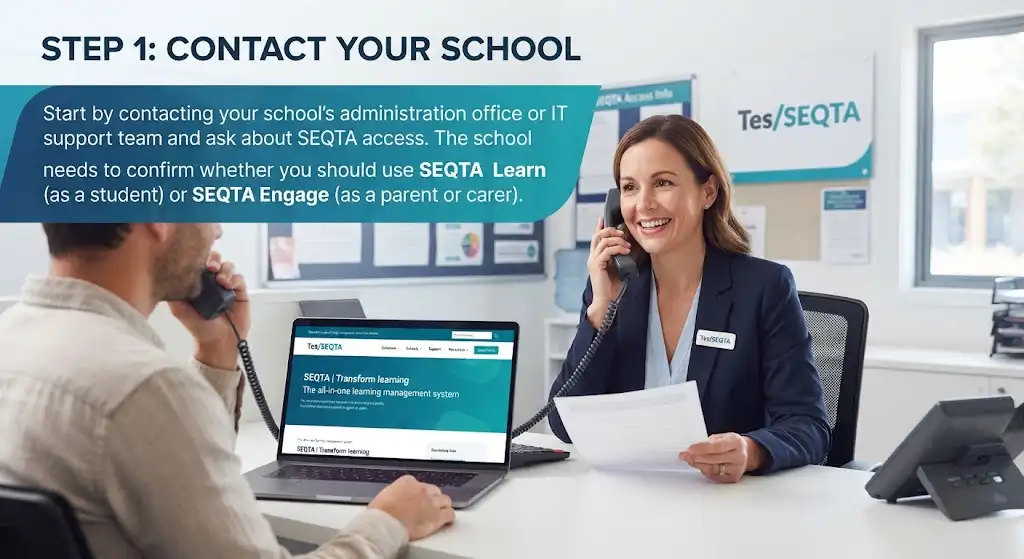
Start by contacting your school’s administration office or IT support team and ask about sequta access. The school needs to confirm whether you should use sequta Learn as a student or sequta Engage as a parent or carer.
Step 2: Receive Your SEQTA Access Details
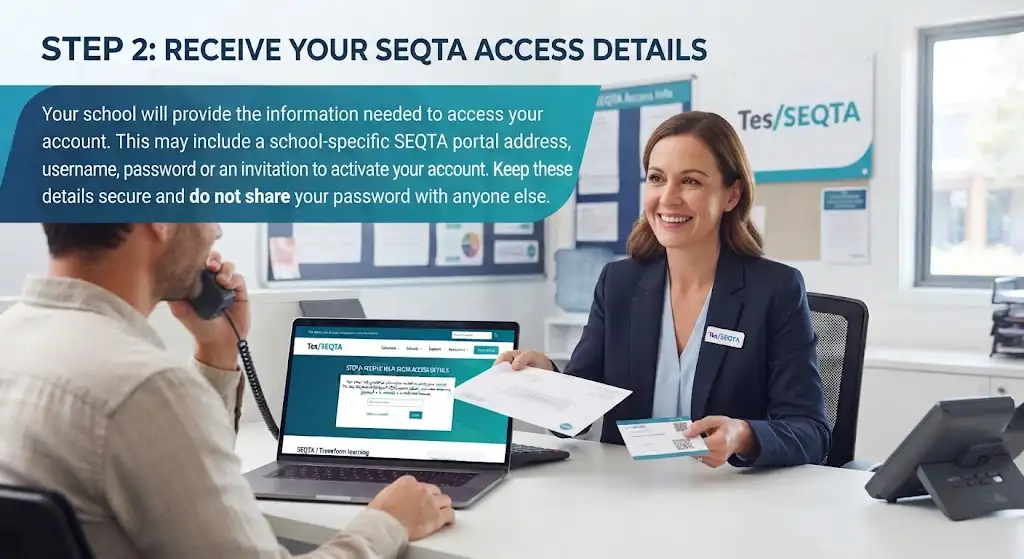
Your school will provide the information needed to access your account. This may include a school-specific sequta portal address, username, temporary password or an invitation to activate your account.
Keep these details secure and do not share your password with anyone else.
Step 3: Open Your School’s SEQTA Portal
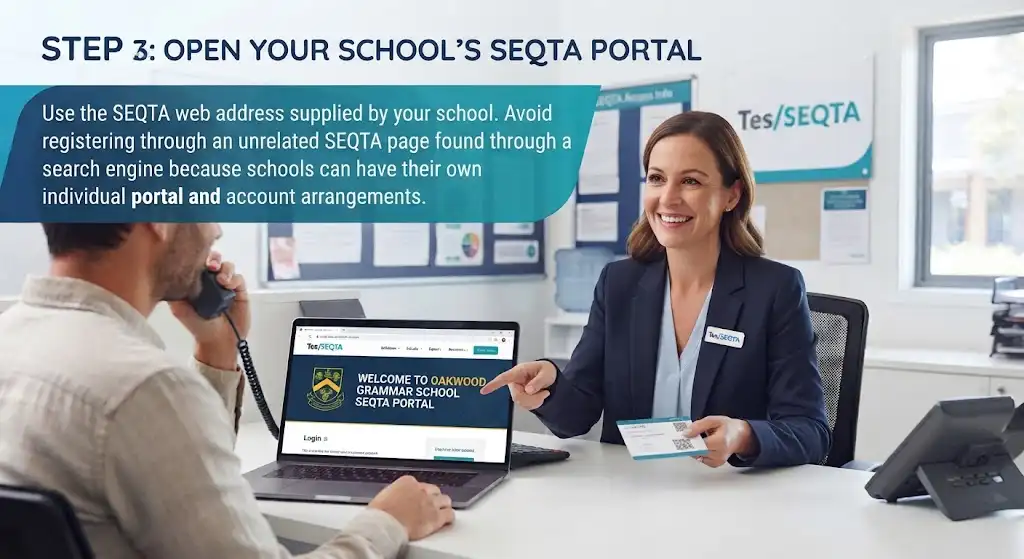
Use the sequta web address supplied by your school. Avoid registering through an unrelated sequta page found through a search engine because schools can have their own individual portal and account arrangements.
Step 4: Select the Appropriate SEQTA Service
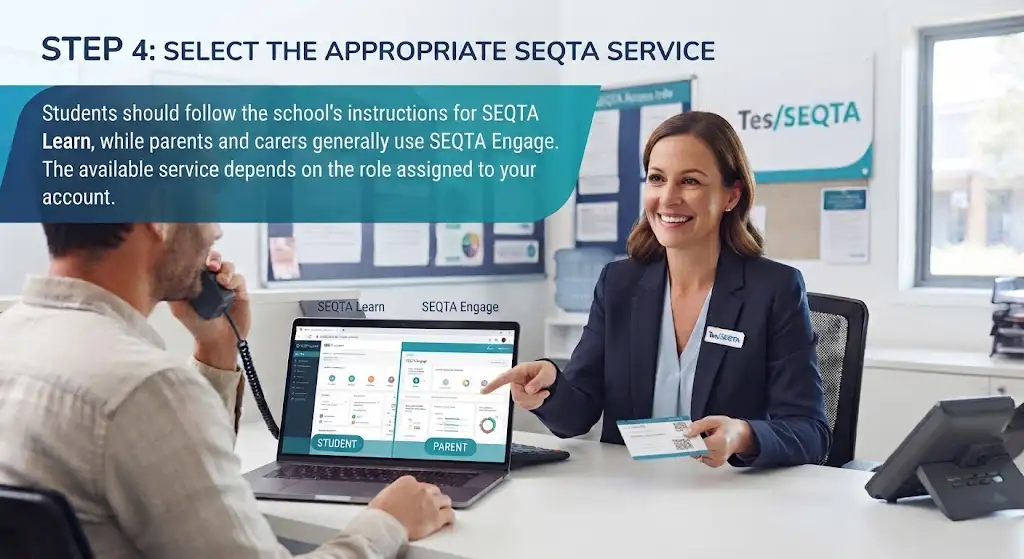
Students should follow the school’s instructions for sequta Learn, while parents and carers generally use sequta Engage.
The available service depends on the role assigned to your account.
Step 5: Activate Your Account
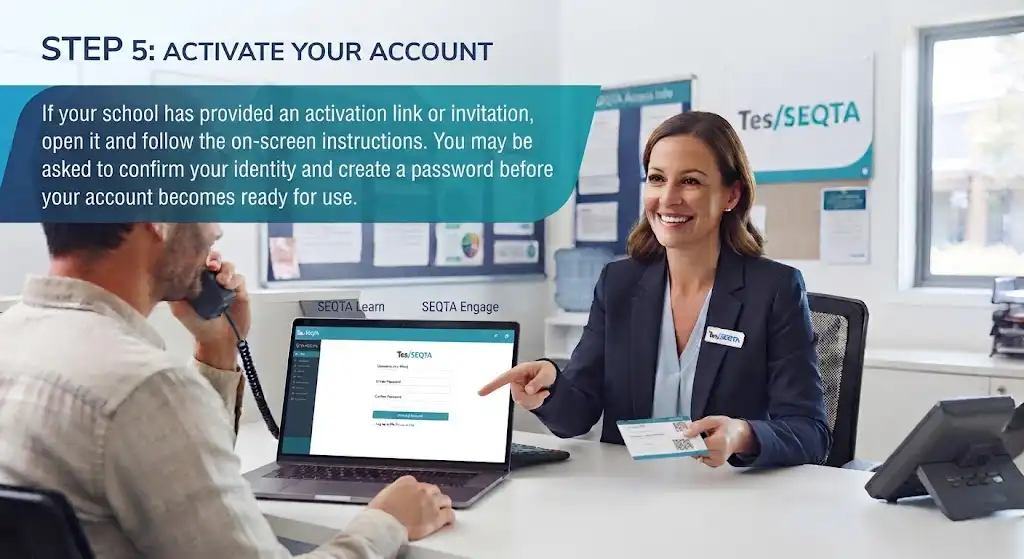
If your school has provided an activation link or invitation, open it and follow the on-screen instructions. You may be asked to confirm your identity and create a password before your account becomes ready for use.
Step 6: Set Your Password
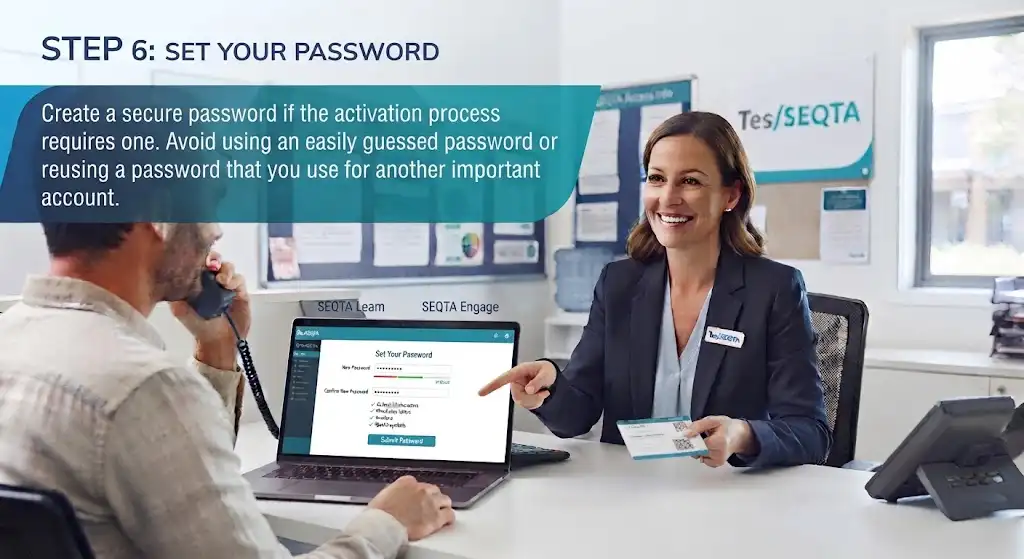
Create a secure password if the activation process requires one. Avoid using an easily guessed password or reusing a password that you use for another important account.
Step 7: Complete Single Sign-On Setup
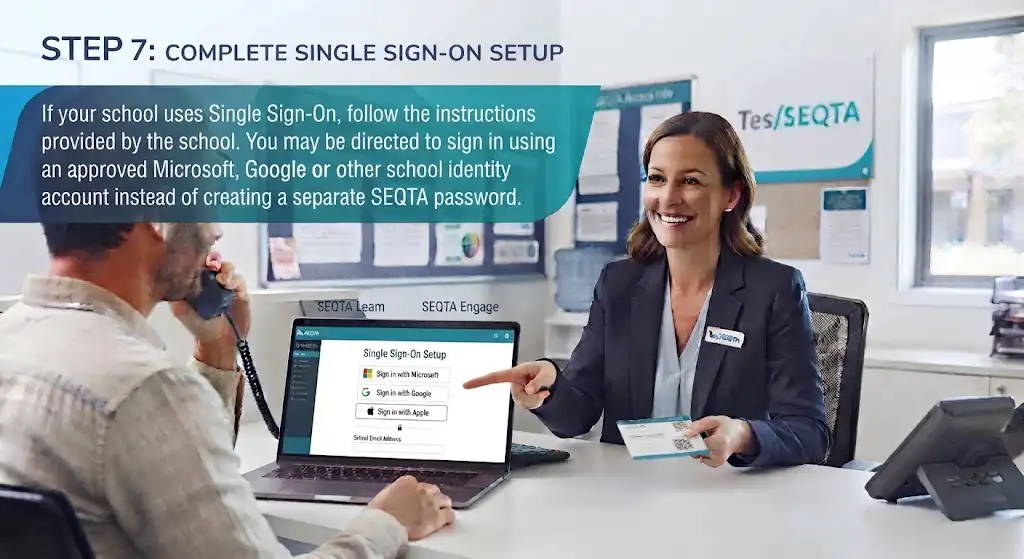
If your school uses Single Sign-On, follow the instructions provided by the school. You may be directed to sign in using an approved Microsoft, Google or other school identity account instead of creating a separate sequta password.
Step 8: Sign In to SEQTA
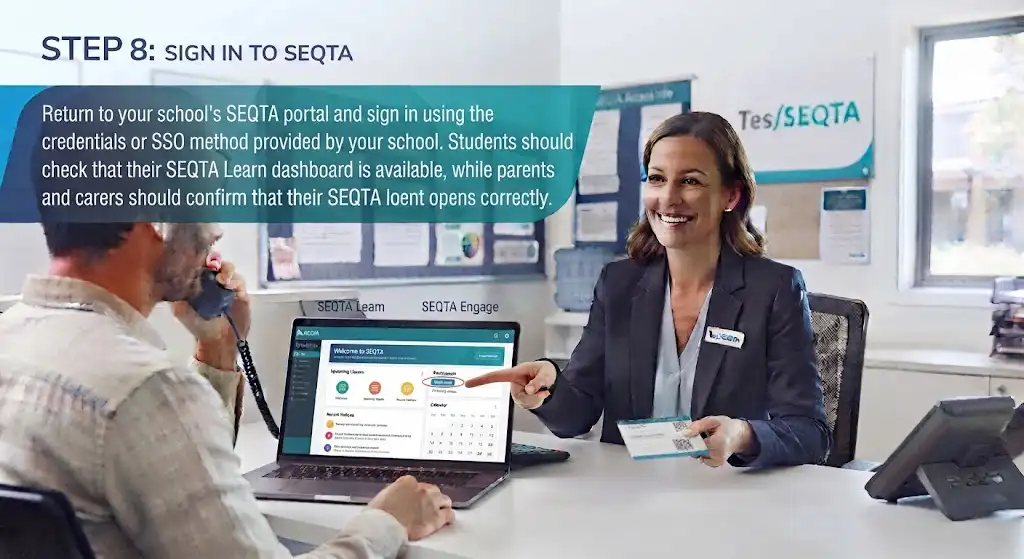
Return to your school’s sequta portal and sign in using the credentials or SSO method provided by your school.
Students should check that their sequta Learn dashboard is available, while parents and carers should confirm that their sequta Engage account opens correctly.
Step 9: Check Your Account Information
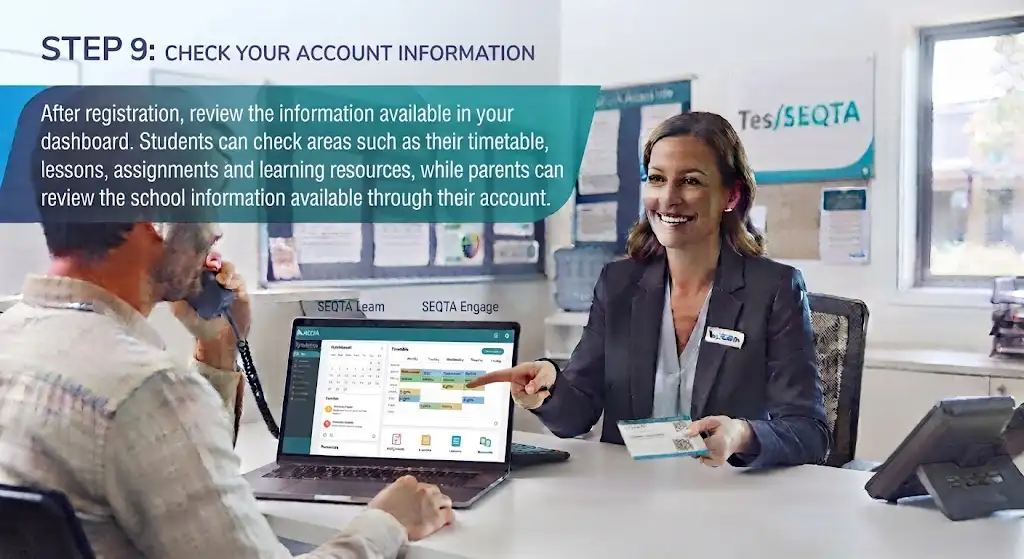
After registration, review the information available in your dashboard. Students can check areas such as their timetable, lessons, assignments and learning resources, while parents can review the school information available through their account.
Step 10: Contact the School if Registration Fails
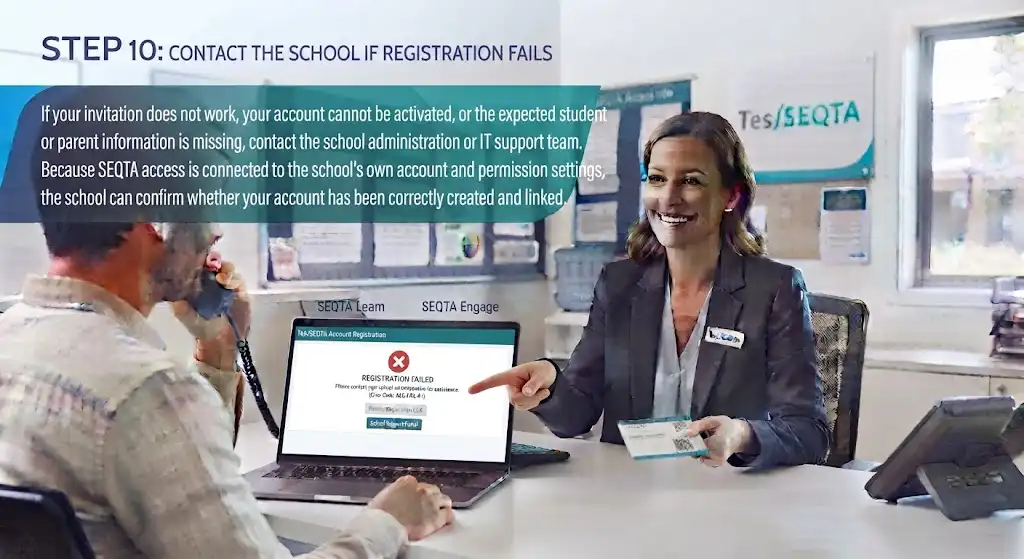
If your invitation does not work, your account cannot be activated, or the expected student or parent information is missing, contact the school administration or IT support team.
Because sequta access is connected to the school’s own account and permission settings, the school can confirm whether your account has been correctly created and linked.
Important Things to Know Before Using SEQTA
The most useful habit is to treat your school’s instructions as the primary source for account access. sequta is a school-managed environment, so your school’s setup determines the portal address, account permissions and many of the features you see.
If something is missing from your dashboard, it does not necessarily mean that the platform does not support it. The feature may simply not be enabled for your school, user role or particular account.
How to Use SEQTA for Everyday School Tasks
Once you have successfully entered sequta, the platform becomes most useful when you make it part of your normal school routine. Students can check upcoming lessons and assessment requirements, while parents can review available information about attendance, learning and school communications.
Because each school configures its sequta environment differently, some menu names, dashboard sections or available actions may vary.
Checking Your Timetable
The timetable is one of the most frequently used parts of sequta for students. It can provide a view of scheduled lessons and related information, helping students understand where they need to be and what is planned for the day.
When checking your timetable, look beyond the subject name. If your school provides additional lesson details, these may include classroom information, teacher details or resources connected with the lesson.
A good routine is to check the timetable at the beginning of the school day and again when planning the following day.
Finding Homework and Upcoming Tasks
Students can use sequta to keep track of work that teachers have assigned. Depending on the school’s configuration, tasks may appear alongside due dates, subject information and supporting learning material.
Before starting an assignment, read the complete task instructions. If a rubric, attachment or teacher note is available, review it before beginning rather than waiting until the work is finished.
This simple habit can prevent avoidable mistakes, especially when an assessment contains several requirements.
Reviewing Assessment Information
Assessment information can help students organise their workload. When several subjects have assignments due around the same time, the sequta dashboard can provide a useful reference point for planning.
Students should pay attention to both the deadline and the assessment requirements. A due date tells you when work is expected, but the assessment instructions explain what needs to be completed.
Checking Teacher Feedback
Where teachers provide feedback through sequta, students can use it to understand what they have done well and where further improvement may be needed.
Feedback is most useful when treated as part of the learning process rather than simply as a comment attached to a completed assignment. Re-reading teacher feedback before beginning a similar task can help students apply previous advice to future work.
SEQTA Mobile Apps
Mobile access can make sequta more convenient for users who regularly check information while away from a computer. Tes provides dedicated mobile experiences for sequta Learn and sequta Engage.
SEQTA Learn App
The sequta Learn app is intended for students and provides access to student-focused information through a mobile device.
It can be useful for checking timetable information, learning activities, assessments and other information while travelling between classes or when a computer is not available.
SEQTA Engage App
sequta Engage provides parents and carers with mobile access to relevant school information. Depending on the school’s setup, this can include communication, learning progress, attendance and wellbeing information.
Before relying on mobile access, make sure the app is connected to the correct school account and that notifications are configured appropriately.
SEQTA Login Problems and Practical Fixes
A failed sequta login does not always mean that your password is wrong. Browser settings, an incorrect school portal, outdated software or account restrictions can also cause problems.
Incorrect Username or Password
First, carefully re-enter your credentials. Check that Caps Lock is not enabled and make sure there are no accidental spaces before or after the username.
If the problem continues, use the password recovery option provided on your school’s login page if one is available.
If your school manages the account centrally, you may need to contact the school’s IT support team or administration office.
Forgotten Password
Use the password-reset option on the relevant sequta login screen when your school has enabled self-service recovery.
Follow the instructions provided and use the email address or username associated with your account.
If no recovery message arrives, check the junk or spam folder before trying again. If you still cannot recover the account, contact your school rather than repeatedly attempting different passwords.
SEQTA Page Will Not Load
When a sequta page does not open, first confirm that you are using the exact school portal address.
A common mistake is entering a general sequta-related address found through a search engine instead of the specific portal supplied by the school.
You can also try:
If other websites work normally but your school’s sequta portal remains unavailable, the issue may require school-level support.
Mobile App Is Not Synchronising
If information appears outdated in the sequta Learn or sequta Engage app, check whether an update is available for the application.
After updating, close and reopen the app. If necessary, sign out and authenticate again using the account associated with your school.
Avoid deleting account information or changing settings repeatedly unless your school’s instructions specifically require it.
Single Sign-On Keeps Returning to the Login Screen
An SSO loop can occur when an existing browser session conflicts with the authentication process.
A useful troubleshooting step is to open a private browsing window and start the login process again from your school’s official portal.
If the issue continues across different browsers or devices, the school or its IT support team may need to investigate the account or authentication configuration.
SEQTA Security and Account Safety
Because sequta can contain educational and student information, users should treat their login credentials carefully.
Protect Your Password
Never share your sequta password with another person. This includes friends or classmates who offer to log in on your behalf.
If you believe another person knows your password, change it if your school’s system permits you to do so and contact the appropriate school support team if necessary.
Be Careful With Saved Login Details
Using a personal device can make access more convenient, but shared computers require extra care.
Do not save your password on a public or shared computer. Always sign out when using a device that another person can access.
Use the Correct School Portal
Avoid entering credentials into unfamiliar pages that claim to provide sequta access.
Start from the portal address supplied by your school or its official instructions. This reduces the risk of entering your credentials into an unrelated website.
Understanding SEQTA Attendance and Wellbeing Information
SEQTA brings learning-related information together with areas such as attendance and wellbeing. Tes identifies attendance and wellbeing as important parts of the wider sequta environment.
Attendance Management
Schools can use sequta to manage attendance information and provide relevant visibility to authorised users.
For parents, the available information may help identify attendance entries that require attention. Students can also benefit from knowing how their attendance information is recorded.
The exact process for reporting an absence is school-specific, so always follow the instructions provided by your school.
Wellbeing Information
Wellbeing features allow schools to manage relevant student support information within the broader platform. Access to this information is controlled according to user permissions and the school’s processes.
Users should not expect every wellbeing function to appear in every sequta account.
Marksbook, Reporting and Academic Information
Marksbook is another important area within the sequta environment. It supports school staff with assessment and academic information, while relevant results can be made available to students and parents according to school settings.
Understanding Marks and Results
A mark displayed in sequta should be considered alongside the assessment type, criteria and teacher feedback.
One result does not necessarily represent a student’s complete academic performance. Schools may use different assessment and reporting methods across subjects.
Reports and Progress Information
sequta also supports reporting functions that can help schools organise academic information. Tes identifies Marksbook, reporting and analytics among the platform’s capabilities.
Parents and students should follow the school’s explanation of how grades and reports are presented.
SEQTA for Teachers and School Staff
Although students and parents are often the most visible users, sequta also supports teaching and administrative workflows.
Teachers can use the platform to organise curriculum information, manage assessments, communicate with students and maintain relevant student records.
Lesson and Curriculum Management
sequta provides tools that schools can use to manage curriculum and lesson information. Teachers can organise learning activities and make appropriate resources available to students.
This creates a connection between what is planned by the teacher and what students can see through their own access.
Assessment Management
Teachers can use assessment tools to manage tasks and academic information. Marksbook and reporting features can help staff maintain assessment records and provide appropriate information to students and families.
The exact workflow depends on school policies and the teacher’s use of the platform.
Communication With Students and Families
Communication functions can help schools share information with the appropriate members of the school community.
Because permissions differ between users, a teacher’s sequta environment can contain functions that are not visible to a student or parent.
SEQTA Integration With Other School Systems
A school rarely operates through one digital platform alone. sequta can work alongside other systems used by schools for learning, administration, communication and identity management.
Tes describes sequta as part of a connected school technology environment and provides integration and compatibility information for schools using other systems. (tes.com)
Why Integrations Matter
Integrations can reduce the need for users to enter the same information into multiple systems. They can also help schools connect different parts of their digital environment.
For students and parents, this may mean that some information appears in sequta even though the underlying process is managed by another school system.
Common SEQTA Mistakes to Avoid
A few simple mistakes can create unnecessary access problems.
Using the Wrong Portal
Do not assume that every sequta school uses the same web address. Always start with the portal supplied by your school.
Creating Duplicate Accounts
If you cannot log in, creating another account is usually not the first step. Confirm whether your existing school account is active and whether your school uses SSO.
Ignoring School Instructions
Your school controls many aspects of sequta access. If its instructions differ from a general online guide, follow the school’s current instructions.
Repeatedly Guessing Passwords
Multiple failed attempts can create additional account problems depending on the school’s security configuration. If you are unsure of your password, use the supported recovery process or contact school support.
Quick SEQTA Troubleshooting Checklist
Before contacting support, check the following:
How to Get Help With Your SEQTA Account
When normal troubleshooting does not resolve an access problem, the next step is usually to contact the school rather than repeatedly attempting to change the account yourself.
sequta is used within individual school environments, so the school can provide the most relevant information about account permissions, portal addresses, password policies and available features.
When to Contact Your School
Contact your school’s administration office or IT support team if:
When contacting support, explain the problem clearly and include useful details such as the device and browser you are using. Never send your password in an email or support message.
How Students Can Use SEQTA More Effectively
sequta is most useful when students use it as part of their normal study routine rather than checking it only when an assignment is overdue.
Check the Dashboard Regularly
A short daily check can help students identify new tasks, timetable changes, announcements and upcoming deadlines.
This is especially useful when several subjects have assessments scheduled within the same week.
Review Instructions Before Starting Work
Open the complete assessment information before beginning an assignment. Check the deadline, instructions, attachments, criteria and any teacher comments that have been provided.
This gives you a clearer picture of what needs to be completed.
Use Feedback for Future Tasks
When teacher feedback is available, read it carefully and look for patterns. If a teacher highlights the same area more than once, make a note of it before your next assessment.
sequta can therefore act as more than a place to check marks. It can support an ongoing learning process.
How Parents Can Use SEQTA More Effectively
Parents can also get more value from SEQTA Engage by using it as a regular communication tool rather than relying only on individual messages from the school.
Check Important Updates
Review new communications and notices regularly. If a message contains a deadline, event date or action that you need to complete, record it in your preferred calendar.
Look at Attendance Information
Use available attendance information to stay aware of recorded absences and related notices. If something does not look correct, follow the school’s official process for raising the issue.
Discuss Learning Progress
If you notice an academic concern, use the information available in sequta as a starting point for a conversation with your child.
For detailed academic questions, speak with the relevant teacher or school staff member because they can provide context that a dashboard alone cannot show.
SEQTA Accessibility and Device Use
Modern school portals need to work across a range of devices and user circumstances. sequta is designed as a cloud-based environment and provides browser and mobile access for relevant users.
For students, mobile access can be useful for quick checks, while a larger screen may be preferable for reading detailed assessment instructions or working with learning resources.
Parents may find the mobile experience convenient for checking communications and school information while away from a computer.
If a page looks unusual on a particular device, try updating the browser or using another supported browser before assuming that the account itself is faulty.
Privacy and Responsible Use
School platforms can contain information relating to students, learning, attendance and wellbeing. Users should therefore treat sequta access as private.
Keep Account Information Confidential
Never give your password to classmates, friends or other people who are not authorised to use your account.
Parents should also avoid sharing screenshots that contain private student information on public websites or social media.
Log Out on Shared Devices
If you use a library, school computer, family computer or another shared device, sign out when you finish.
Do not rely only on closing the browser window, particularly when the device is accessible to other people.
Keep Contact Information Current
If your school allows parents to update relevant contact information through its systems, make sure the details remain accurate. Current contact information can be important for school communications and account recovery.
For changes that cannot be made through the platform, contact the school office.
SEQTA Compared With Traditional School Communication
One of SEQTA’s main purposes is to bring different types of school information into a connected digital environment.
| Area | Traditional Approach | SEQTA-Based Approach |
|---|---|---|
| Timetable | Printed schedule or separate notice | Digital timetable information |
| Homework | Paper diary or classroom notice | Online task information |
| Assessment | Separate documents | Assessment information in the platform |
| Parent communication | Letters, calls or separate systems | Digital school communications |
| Attendance | Office records and notices | Digital attendance information |
| Academic information | Reports or individual updates | Available academic information through authorised access |
| Learning resources | Printed or separate online locations | Resources can be connected to learning areas |
The exact experience depends on the school and the systems it has enabled.
Final SEQTA Access Checklist
Before finishing your setup, make sure you can:
Frequently Asked Questions About SEQTA
Conclusion
SEQTA provides schools with a connected digital environment for learning, assessment, attendance, wellbeing and communication. For students, SEQTA Learn can bring together everyday academic information such as timetables, assignments, learning resources and grades, while SEQTA Engage gives parents and carers access to relevant school information.
The most important point for new users is that SEQTA access is school-specific. Your school determines the portal address, authentication method, account permissions and features available to you. If login recovery, attendance information or a particular feature does not work as expected, the school’s administration or IT support team can confirm what should be available.
Used consistently, SEQTA can make routine school information easier to access and help students, parents and staff stay connected with the information relevant to their role.
READ MORE:
Goodstart Intranet 2026: Staff Login, Employee Tools & Services
Blacktown Council Pick Up 2026: Household Clean-Up Service Guide
WOVI Inspection 2026: Complete Guide to Booking, Requirements and Vehicle Inspection
Blue Slip NSW: Complete Guide to the AUVIS Inspection in 2026
myGov Australia (2026): Complete Guide to Login, Services & Account Access