

Australian Passport services are important for citizens who need to travel overseas, prove their identity, or keep their international travel documents valid. Whether you are applying for your firstpassport renewal, renewing a current or recently expired passport, replacing a damaged document, or arranging a passport for a child, knowing what to prepare can help avoid unnecessary delays.
The Australian Passport system uses online application tools alongside identity checks and compulsory in-person lodgement. Although many applications can be started online, applicants still need to present original documents and attend an approved passport lodgement location before their application can be processed for issue. Visit Homepage
This guide covers the main passport renewal eligibility requirements, document preparation, application steps, renewal arrangements, replacement options, child passport considerations, and important travel-related points for Australian citizens in Australia and those living overseas.
Understanding Australian Passport Services
An passport renewal is an official document issued to Australian citizens for international travel. It provides evidence of identity and Australian citizenship and is used when entering or leaving other countries.
The passport renewal system offers different services based on the applicant’s circumstances. Choosing the correct service is important because the requirements and application process can vary between passport types.
Main Australian Passport Services
| Service Type | Who Can Use It | Purpose |
|---|---|---|
| First-Time Adult Passport | Australian citizens who have never held an adult passport | Initial passport issuance |
| Passport Renewal | Eligible existing passport holders | Renewal of an expiring or expired passport |
| Replacement Passport | Individuals with damaged passports or updated personal details | Replacement without full renewal in eligible cases |
| Child Passport | Applicants under 18 years of age | International travel documentation for minors |
| Emergency Passport | Australians overseas facing urgent travel situations | Temporary travel document for emergency use |
Each passport renewal service has its own requirements and may require different supporting documents or application steps. Checking which category applies to you before preparing the application can make the process more straightforward.
Who Can Apply for an Australian Passport?
Before starting an passport renewal application, you should confirm that you meet the citizenship requirement and have the documents needed to establish your identity. Preparing this information in advance can make the application and lodgement stages easier to manage.
Citizenship Requirements
To obtain an passport renewal you must be an Australian citizen.
Depending on your circumstances, acceptable evidence of Australian citizenship may include:
Citizenship evidence will generally need to be provided in its original form during the passport lodgement process. Make sure the document you intend to use is valid, complete, and matches the personal information supplied in your application.
Identity Verification Requirements
Identity verification is a central part of the passport renewal application process. Applicants are commonly expected to provide documents from different identification categories to establish who they are and, where required, confirm their residential details.
Category A Documents
Examples may include:
Category B Documents
Common examples include:
Category C Documents
Evidence of residential address may include:
The personal information shown on your documents should be consistent wherever possible. Differences in names, dates of birth, or other identifying details may require additional supporting evidence before the application can be completed.
Australian Passport Photo Requirements
Passport photographs are an important part of the application, and photographs that do not meet the required standards can lead to processing problems or delays.
Applicants generally need:
Photographs must meet the official passport renewal photo standards. Images that are damaged, digitally altered, filtered, unclear, or otherwise unsuitable may not be accepted.
Important Photo Tips
Taking care of the photographs after they are printed is also important. Even a correctly produced passport photo can become unsuitable if it is damaged, marked, folded, or handled in a way that affects its condition before lodgement.
Documents You Should Prepare Before Applying
Preparing your supporting documents before starting the passport renewal application can help you complete the process more efficiently. It also gives you an opportunity to identify missing information before you reach the lodgement stage.
Essential Application Checklist
Prepare the following:
Having these materials ready before beginning the online application can reduce the risk of stopping part-way through the process. It is also useful to check that names and other personal details are consistent across the documents you intend to provide.
First-Time Australian Passport Application Process
Applying for a first passport renewal involves several stages. These can include completing the online application, preparing the required documents, arranging guarantor certification where applicable, and attending an approved location for in-person lodgement.
Begin the Online Application
The first stage is to enter your personal information through the passport renewal application system. The details supplied at this stage should be accurate and should match the supporting documents you will provide later.
Applicants are usually required to provide:
Review each field carefully before finalising the online portion of the application. Errors in names, dates, addresses, or other personal information can create additional work during the later verification and lodgement stages.
Print the Application Form
Once the online section has been completed, a printable application form is generated for the next stage of the process.
When printing:
The printed form should be checked before you attend the lodgement appointment or location. Poor-quality printing, incorrect page formatting, or information that cannot be read clearly may cause problems when the application is reviewed.
The online application is only one part of the passport renewal process. Applicants should still make sure they have their original supporting documents and any other required materials ready for the in-person lodgement stage.
Finding a Suitable Guarantor
For many first-time Australian Passport applications, a guarantor is required to support the applicant’s identity and help confirm that the application and accompanying photograph belong to the person applying. The guarantor must meet the relevant passport renewal Australian Passport requirements and should be someone who can provide the required confirmation without having a conflict with the application.
Who Can Act as a Guarantor?
A guarantor is generally required to:
The guarantor may need to complete and sign the designated sections of the printed passport renewal application form. They may also be required to endorse one of the passport photographs according to the application requirements.
Before choosing someone as your guarantor, make sure they meet all of the applicable conditions. Selecting a person who does not satisfy the requirements could mean that the application needs to be corrected or supported by another eligible guarantor.
Lodging Your First-Time Application
After the application form has been completed, signed and prepared with the required supporting material, applicants must attend an approved lodgement location in person.
Bring:
The documents provided at lodgement are used to verify the information supplied in the application. Applicants should therefore make sure they bring original documents where required rather than relying only on photocopies or digital versions.
Application fees are generally paid during the lodgement process. Having the application form, photographs and supporting documents organised before attending can make the appointment more efficient and reduce the chance of needing to return with missing items.
Australian Passport Renewal Process
Australian citizens may need to renew an passport renewal when an existing passport is approaching expiry or has already reached the end of its validity. For eligible applicants, renewal can be more straightforward than applying for a first passport because the applicant’s citizenship and identity have already been established through an earlier passport renewal.
Even so, renewal applicants should check the eligibility conditions carefully before starting the process. If the existing passport does not meet the renewal requirements, a different application pathway may be necessary.
Check Your Renewal Eligibility
You may qualify for an passport renewal renewal if your current passport:
These conditions help determine whether the simplified renewal process is available. If your circumstances have changed, or your existing passport does not satisfy the relevant requirements, you may need to submit another type of passport renewal application instead.
Checking eligibility before completing the renewal form can help prevent unnecessary delays. It is particularly important to review the passport’s condition and the personal information recorded on it.
Complete the Renewal Application
The renewal process usually starts online. Applicants are asked to review the information connected with their existing passport and confirm that the details remain correct.
Applicants verify:
After checking the information, the completed renewal application should be printed as instructed. Review the printed form before lodgement to make sure the details are clear and accurate.
If your circumstances have changed since the previous passport was issued, pay particular attention to your name, address and other personal information. Any required supporting documentation should also be prepared before attending the lodgement location.
Prepare Supporting Materials
Before going to the approved lodgement location, make sure the required materials are ready.
You should have:
For many standard renewals, a guarantor is not required in the same way it may be for a first-time application. However, applicants should still follow the requirements that apply to their particular renewal circumstances.
Keeping the existing passport and new photographs together with the printed form can help ensure that nothing essential is left behind when attending the lodgement location.
Attend an Approved Lodgement Location
Take the completed renewal application and required materials to an approved lodgement centre. The documents are checked as part of the application process before the renewal can proceed.
During the appointment:
One point that can surprise applicants is that an existing passport submitted for renewal may become invalid as the application process progresses. If you have upcoming international travel, check your passport status and timing carefully before submitting it for renewal.
Australian Passport Replacement Applications
A replacement passport renewal may be more appropriate than a standard renewal in certain circumstances. The correct pathway depends on why the passport needs to be replaced and on the applicant’s individual situation.
Replacement applications can apply to circumstances involving changed personal details, gender information updates, passport damage, or cases where the existing document still has a significant amount of validity remaining.
When a Replacement Passport May Be Appropriate
A replacement passport renewal may be available when:
Replacement eligibility depends on the applicant’s circumstances and, where relevant, the amount of validity remaining on the current passport. Not every situation will qualify for a replacement rather than another form of application.
If you are unsure which pathway applies, carefully review the requirements associated with your circumstances before submitting an application.
Replacing a Damaged Passport
A damaged passport renewal may require additional information so the authorities can assess its condition and determine the appropriate replacement process.
Applicants may need to explain:
The extent and nature of the damage can affect how the application is handled. Keep the damaged passport available as supporting evidence when it is requested, rather than discarding it before the replacement process has been completed.
Providing a clear explanation of the damage can also help ensure that the application contains the information needed for assessment.
Updating Name or Personal Details
If your personal information has changed, supporting documentation may be needed to establish the new details. The evidence supplied should clearly support the information entered on the passport renewal application.
Applicants changing personal information may need supporting evidence such as:
The supporting records should correspond with the details being requested on the application. Where names have changed more than once or the circumstances are more complex, additional documentation may be required to establish the connection between previous and current details.
How to Register for an Australian Passport
Although there is no traditional “registration” process, applicants must create and complete an Australian Passport application before lodging their documents. Follow these five steps to get started.
Step 1: Check Your Eligibility
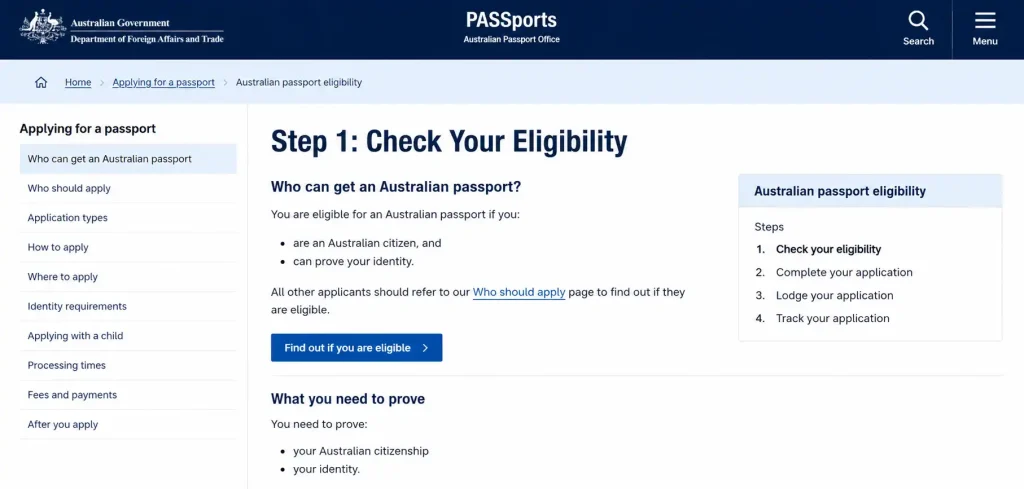
Before starting an passport renewal application, confirm that you are an Australian citizen and have the required citizenship and identity documents available. First-time applicants, renewals, child passport applicants, and replacement passport applicants may have different requirements.
Step 2: Gather Your Required Documents
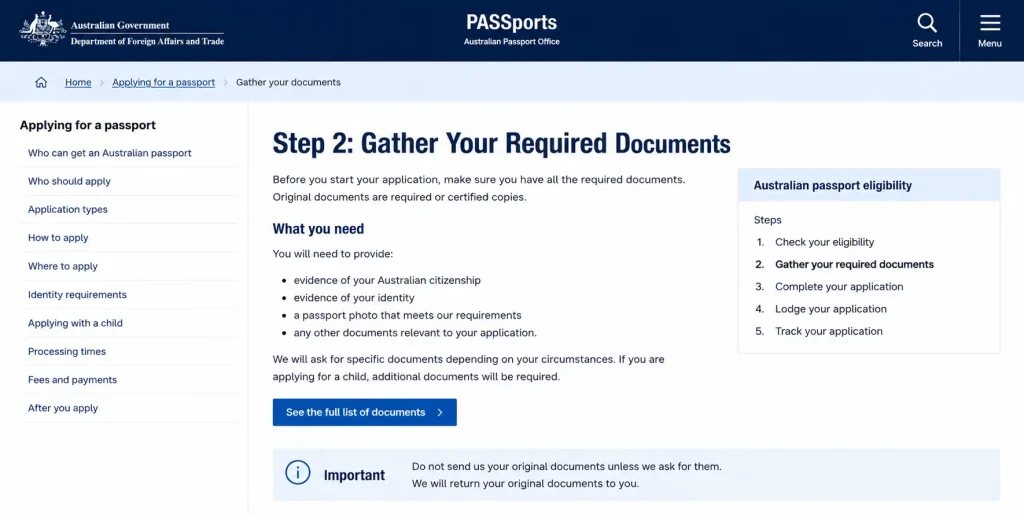
Prepare all supporting documents before beginning the application. This may include:
Having documents ready can help prevent delays later in the process.
Step 3: Complete the Online Application

Access the Australian Passport application system and enter your personal information, citizenship details, contact information, and other required data. Review everything carefully before submitting the application.
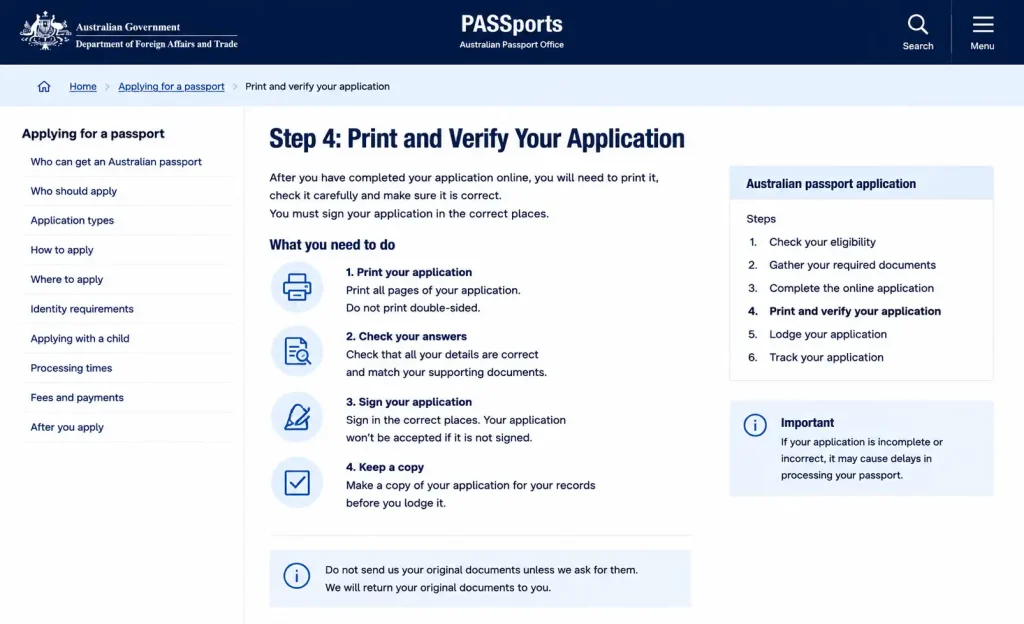
Step 4: Print and Verify Your Application

After completing the online form, print the generated application document using the required format. If your application requires a guarantor, have the relevant sections completed and signed before proceeding.
Step 5: Lodge Your Application in Person
Take your printed application, passport photos, original documents, and supporting paperwork to an approved lodgement location. Pay the applicable fee and complete the identity verification process. Once your application is accepted, passport processing will begin.
Child Australian Passport Applications
Children under 18 require a Child Australian Passport when they need to travel internationally. The application process includes additional requirements because authorities must establish the child’s identity, citizenship and the relevant parental responsibility arrangements.
Parents or guardians should prepare the required documents well before planned international travel. Child passport applications can involve additional consent and supporting-document requirements, particularly where family circumstances are not straightforward.
Documents Required for a Child Passport
Parents or guardians commonly need:
The exact supporting material can depend on the child’s circumstances and the people who have parental responsibility. Make sure the documents are prepared before attending the lodgement process so that any required evidence can be provided when requested.
Parental Consent Requirements
Parental consent is an important part of the Child Australian Passport process. The passport application must account for the people who hold parental responsibility and the circumstances surrounding consent.
In many cases:
Where parental responsibility arrangements are unusual or one person cannot provide consent in the normal way, additional evidence may be necessary. Applicants should therefore prepare relevant court orders or other approved documentation where applicable.
Child Passport Validity
Child Australian Passport documents generally have a shorter validity period than standard adult passports. Child passports generally remain valid for five years.
Parents should keep track of the passport’s expiry date and check it well before making international travel arrangements. Some countries and airlines may require a passport to have a certain amount of validity remaining beyond the planned travel dates, so checking requirements early can help avoid last-minute problems.
Emergency Australian Passport Services
Urgent travel problems can arise when an Australian citizen is overseas without a usable passport. In certain circumstances, Australians overseas may be able to seek an Emergency Australian Passport through an Australian embassy or consulate.
Emergency passport services are intended for situations where urgent travel needs make it impractical to follow the normal passport process. The applicant’s circumstances and supporting evidence can affect whether emergency arrangements are available.
Situations That May Require an Emergency Passport
Examples include:
An Emergency Australian Passport is intended to help with urgent travel needs rather than serve as a direct replacement for every feature or use of a standard Australian Passport. Travellers should understand that emergency documentation can have different conditions from a regular passport.
If a passport is lost or stolen overseas, applicants should act promptly and contact the relevant Australian diplomatic or consular service for guidance on the appropriate next steps. Keeping evidence of the circumstances and any urgent travel requirements may also help when the situation is assessed.
Australian Passport Processing Times
The time required to process an passport renewal can differ according to application demand, the complexity of document checks, whether the application is complete, and the processing service selected. Applications that contain accurate information and all required documents are generally less likely to experience avoidable delays.
Applicants should also remember that the advertised processing period does not necessarily represent the full time from starting an application to receiving the passport. The application must first be lodged successfully and accepted for assessment, and additional time may be needed for delivery.
Typical Processing Options
| Processing Service | Estimated Timeframe | Suitable For |
|---|---|---|
| Standard Processing | Around 6 weeks | Routine travel planning |
| Fast Track Processing | Approximately 5 business days | Urgent travel requirements |
| Priority Processing | Approximately 2 business days | Time-sensitive travel situations |
Processing times begin only after the application has been successfully lodged and accepted for assessment. Completing the online portion alone does not necessarily mean that the processing timeframe has started.
Applicants should also allow extra time for passport delivery after processing has been completed. If international travel is already booked, it is sensible to leave enough time between the expected passport arrival and the departure date to allow for unexpected processing or delivery issues.
Australian Passport Validity Periods
The length of time an passport renewal remains valid depends primarily on the age of the passport holder. Adult and child passports have different standard validity periods, so applicants should check the expiry date before making international travel arrangements.
Adult Passport Validity
Australian citizens aged 16 and over generally receive a passport valid for:
This is the standard validity period for most adult passport renewal holders. The expiry date is printed on the passport, and travellers should check it well before booking or taking an overseas trip.
Child Passport Validity
Applicants under 16 years of age generally receive:
Child passports generally cannot simply be renewed in the same way as eligible adult passports and often require a new application when the document expires.
Parents and guardians should keep track of the child’s passport expiry date, particularly when international travel is planned. Checking the document several months before travel provides more time to arrange a new passport if necessary.
The Six-Month Passport Validity Rule
Passport expiry dates are not the only dates travellers need to consider. Many destinations apply their own passport validity requirements, and some require an passport renewal to remain valid for a specified period beyond the planned travel date.
A commonly encountered requirement is six months of remaining passport validity. However, the exact rule can differ between countries and may also depend on the traveller’s circumstances.
Why This Rule Matters
A passport does not necessarily become acceptable for travel simply because it has not yet expired. Airlines, immigration authorities and destination countries may apply additional validity requirements, which can affect whether a traveller is allowed to board a flight or enter a country.
Before booking or beginning international travel, check:
Renewing an passport renewal well before its expiry can provide more flexibility and reduce the risk of travel disruption. This is particularly useful for travellers visiting several countries, as different destinations may have different passport validity rules.
Common Australian Passport Application Mistakes
Passport applications can be delayed by relatively small errors or omissions. Reviewing the application carefully before lodgement can help identify problems that might otherwise require corrections or additional documentation.
Incorrect Printing Settings
Application forms should be printed according to the instructions provided as part of the application process. The printed document needs to remain clear and readable so it can be checked during lodgement.
Common printing mistakes include:
Any of these problems can interfere with the proper processing of the application. Before attending the lodgement location, check every page to make sure the form has printed correctly and that no information has been cut off or distorted.
Photograph Errors
passport renewal photographs must satisfy specific requirements, so simply submitting two recent photographs does not guarantee that they will be accepted.
Problems often include:
Photographs should be checked carefully before they are included with the application. Keeping them clean, undamaged and free from folds or marks can also help prevent avoidable problems during lodgement.
Inconsistent Personal Information
Information supplied in the application should correspond with the details shown on the supporting documents. Even small differences can lead to additional checks.
Differences involving:
may require additional verification and can increase the time needed to process the application.
Before lodging the application, compare the information across your documents and application form. If your name or other personal details have changed, make sure you have the appropriate supporting evidence to explain the difference.
Important Travel Warnings
An passport renewal is essential for international travel, but holding a valid passport does not automatically mean that every destination will accept it without additional conditions. Travellers should consider passport validity, document condition and destination-specific requirements before departure.
Renewed Passports Affect Existing Documents
Once an passport renewal renewal application progresses through processing, the existing passport may no longer remain valid for international travel.
For this reason, travellers should carefully consider their travel dates before submitting an existing passport for renewal. Avoid making non-refundable travel arrangements that depend on the existing passport remaining usable until the new document has been received and confirmed.
Damaged Passports Can Cause Travel Problems
Passport condition can be important during international travel. A document that appears valid based on its expiry date may still create difficulties if it has significant physical damage.
Problems may arise at:
If an passport renewal shows significant wear or damage, consider addressing the issue before travelling rather than waiting until the airport or border. A replacement may be appropriate depending on the condition and circumstances of the passport.
Emergency Passports Have Limitations
Emergency passport renewal documents are intended for urgent travel circumstances and should not automatically be treated as identical to a standard passport.
In some circumstances they may:
Travellers who receive or are considering an emergency travel document should confirm that their destination and any transit countries will accept it. Checking these requirements before relying on the document can help prevent problems during the journey.
Helpful Tips Before Lodging Your Application
A final review before attending the lodgement appointment can make the application process easier. It is worth checking both the documents and the information supplied rather than assuming everything is ready immediately after completing the form.
Application Preparation Checklist
Before attending your appointment, ensure you have:
Arrange the documents in advance so you can quickly identify anything that may be missing. Check that names, dates and other personal information are consistent across the application and supporting records.
A final review before lodgement can significantly reduce processing issues and help prevent delays caused by incomplete information, unsuitable photographs or missing supporting evidence.
Frequently Asked Questions
Final Thoughts
An Australian Passport is a key travel and identity document for Australian citizens. Whether you are applying for your first passport, renewing an existing document, arranging a passport for a child, replacing a damaged passport or seeking emergency passport assistance while overseas, careful preparation can make the process much easier to manage.
Start by checking the requirements that apply to your particular situation, then prepare your citizenship evidence, identity documents, photographs, application form and any additional supporting records. Taking time to check the information before lodgement can reduce avoidable problems and make it easier for the application to move through the assessment process.
Travel planning also deserves attention. Check the passport expiry date, destination requirements, transit rules and any applicable validity conditions well before departure. Keeping your Australian Passport current and allowing sufficient time for processing gives you more flexibility and reduces the risk of last-minute complications affecting your international travel.
READ MORE:
ImmiAccount Login Guide (2026): Complete Registration, Visa Application & Account Management Guide
Storypark Login Australia 2026: Sign In, Password Reset & Account Access Guide
Minecraft Education Login, Classroom Setup, Coding Tools & Learning Guide