

AHPRA plays a central role in Australia’s healthcare system by regulating registered health practitioners and helping protect public safety. Whether you are a doctor, nurse, midwife, pharmacist, psychologist, physiotherapist, dentist, or another healthcare professional, understanding AHPRA requirements is essential for maintaining professional standards and meeting legal registration obligations. For many practitioners, obtaining and maintaining AHPRA registration is a critical step in legally practising within Australia.
Whether you need to apply for AHPRA registration, renew your annual registration, update personal details, check your registration status, or verify another practitioner’s credentials, understanding the process can help you avoid delays and compliance issues. This guide covers the key aspects of AHPRA and AHPRA registration, including eligibility requirements, registration pathways, renewal procedures, professional responsibilities, and important obligations that every registered health practitioner should know. Visit Homepage
What Is AHPRA?
The Australian Health Practitioner Regulation Agency (AHPRA) is the national organisation responsible for administering Australia’s National Registration and Accreditation Scheme. Working alongside the National Boards, Australian Health Practitioner Regulation Agency regulates registered health practitioners to ensure healthcare services remain safe, ethical, and of a high professional standard.
Rather than providing healthcare directly, Australian Health Practitioner Regulation Agency oversees practitioner registration, manages renewal applications, investigates concerns about registered practitioners, supports accreditation processes, and maintains the public Register of Practitioners.
Healthcare professionals across Australia rely on Australian Health Practitioner Regulation Agency throughout their careers—from initial registration through annual renewal and ongoing compliance with professional standards.
Quick Facts About AHPRA
| Feature | Details |
|---|---|
| Full Name | Australian Health Practitioner Regulation Agency |
| Country | Australia |
| Purpose | Regulates registered health practitioners |
| Registration | National registration system |
| Annual Renewal | Required for registered practitioners |
| Public Register | Available for registration verification |
| Services | Registration, Renewal, Verification, Notifications, Standards |
| Regulated Professions | Multiple healthcare professions across Australia |
Why AHPRA Is Important
AHPRA exists to protect the public by ensuring that only suitably qualified, competent, and ethical healthcare professionals can practise in Australia. Every registered practitioner must meet strict professional standards before receiving registration and continue meeting those standards throughout their career.
For healthcare professionals, Australian Health Practitioner Regulation Agency provides a nationally recognised registration system that allows eligible practitioners to work across Australian states and territories under consistent regulatory requirements.
Patients also benefit because they can verify whether a healthcare practitioner is currently registered and whether any conditions apply to that registration.
Healthcare Professions Regulated by AHPRA
Australian Health Practitioner Regulation Agency works with National Boards that regulate many registered health professions. These include:
Each profession has its own National Board that sets registration standards while Australian Health Practitioner Regulation Agency manages the administrative registration process.
Main Services Offered by AHPRA
Australian Health Practitioner Regulation Agency supports healthcare professionals throughout their professional journey. Some of its key services include:
Practitioner Registration
Eligible applicants can apply for initial registration after meeting qualification, identity, and professional requirements.
Registration Renewal
Registered practitioners must renew their registration each year to remain legally authorised to practise.
Registration Verification
Anyone can check whether a healthcare professional currently holds valid registration through the public register.
Practitioner Login
Registered users can securely access their online account to manage applications, renew registration, update contact details, and track application progress.
Notifications and Complaints
registration check Australian Health Practitioner Regulation Agency receives notifications regarding registered practitioners where concerns are raised about professional conduct, health, or performance.
Professional Standards
National Boards establish registration standards covering professional behaviour, continuing professional development, criminal history declarations, indemnity insurance, English language skills, and recency of practice.
Who Needs AHPRA Registration?
Not every healthcare worker requires registration check Australian Health Practitioner Regulation Agency. Registration is generally mandatory for individuals working in professions regulated under Australia’s National Registration and Accreditation Scheme.
Examples include:
Working without required registration in a regulated profession may lead to legal consequences and restrictions on practising.
Types of AHPRA Registration
Different registration categories are available depending on an applicant’s circumstances and professional background.
General Registration
This is the most common registration category for qualified practitioners who meet all professional requirements.
Provisional Registration
Available for graduates completing supervised practice before obtaining general registration.
Limited Registration
Granted for specific purposes, including supervised practice, teaching, research, or particular workforce needs.
Non-Practising Registration
Allows practitioners to remain registered without actively practising their profession.
Student Registration
Students enrolled in approved healthcare programs may receive student registration where applicable.
Basic Eligibility Requirements
Although requirements vary between professions, applicants generally need to satisfy several important criteria before registration can be approved.
Typical requirements include:
Meeting eligibility requirements does not automatically guarantee registration, as every application is assessed individually.
Documents Commonly Required
Applicants should prepare their documentation before beginning the registration process. Having complete and accurate documents helps reduce processing delays.
Common documents include:
Before You Apply
Taking time to prepare before submitting an application can make the process much smoother.
It is recommended that applicants:
How to Apply for AHPRA Registration
Applying for registration check Australian Health Practitioner Regulation Agency is a structured process designed to confirm that every healthcare practitioner meets Australia’s professional and ethical standards. Although the exact requirements differ between professions, the overall application journey follows a similar pattern. Preparing your documents carefully before starting can significantly reduce delays.
Step 1: Choose the Correct Registration Type
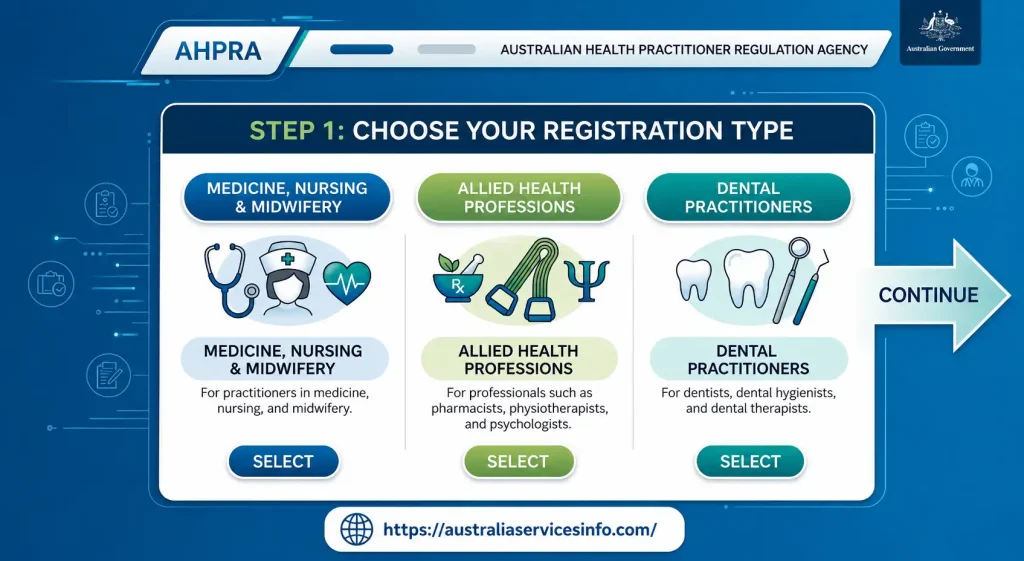
Before beginning your application, determine which registration category matches your circumstances. Applicants may need general registration, provisional registration, limited registration, non-practising registration, or another category depending on their qualifications and career stage.
Selecting the wrong registration type can result in additional processing time or the need to submit a new application.
Step 2: Confirm Your Eligibility
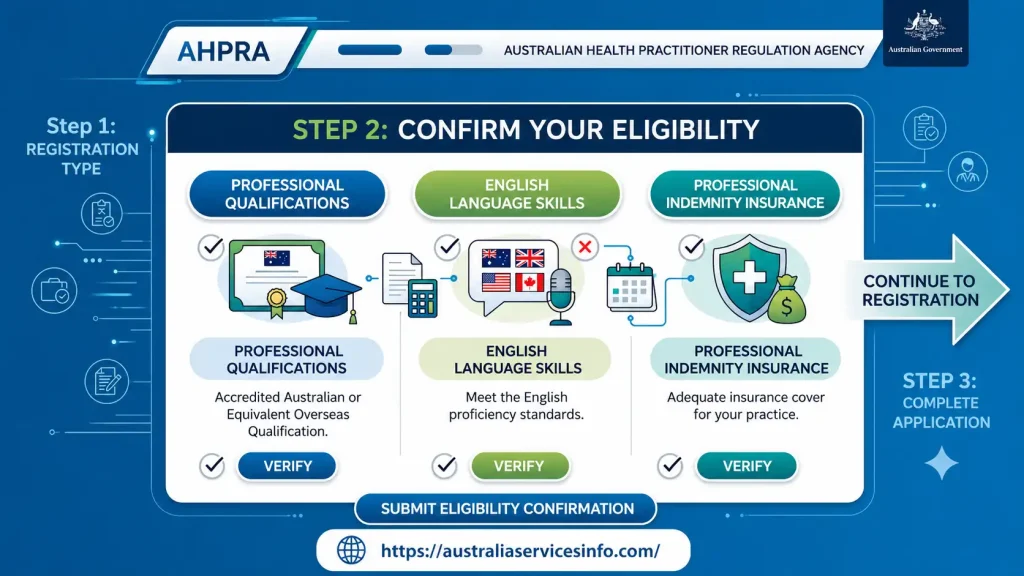
Review the eligibility requirements for your profession. These commonly include approved qualifications, English language proficiency, professional indemnity insurance arrangements, identity verification, criminal history declarations, and compliance with National Board registration standards.
International applicants should also ensure that overseas qualifications meet Australian assessment requirements where applicable.
Step 3: Prepare Your Supporting Documents
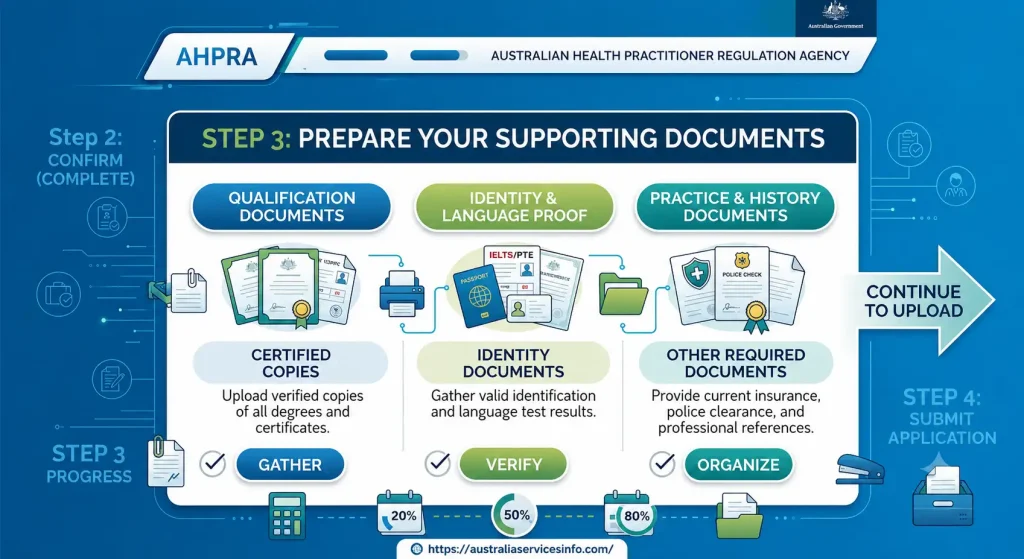
Gather all required documentation before starting the online application. Incomplete applications often take longer to assess.
Documents commonly requested include:
Always check that names, dates, and identification details are consistent across every document.
Step 4: Complete the Online Application
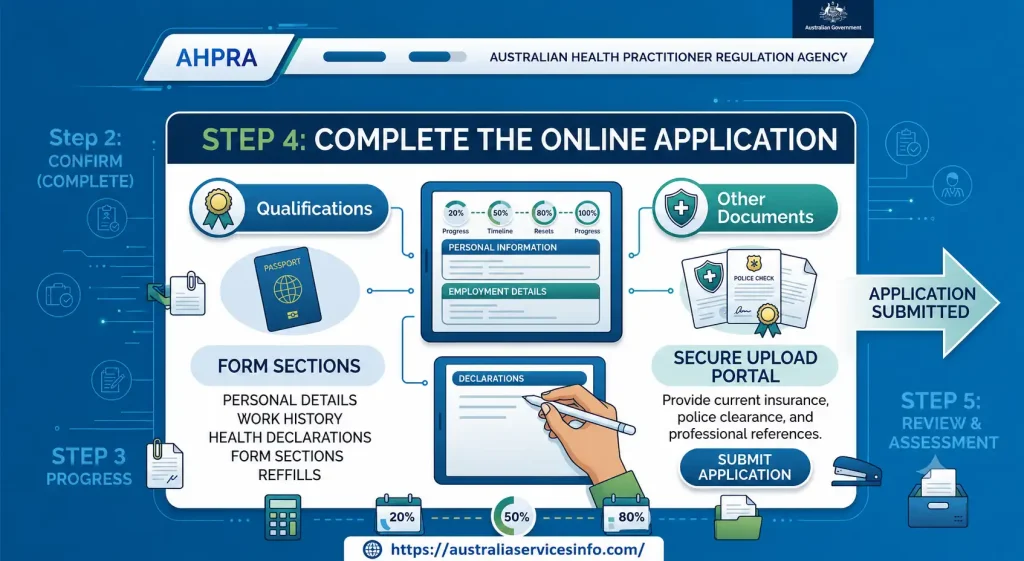
Enter your personal details, educational history, employment information, declarations, and supporting evidence accurately. Review every section carefully before submission to avoid unnecessary corrections later.
Step 5: Pay the Required Registration Fees
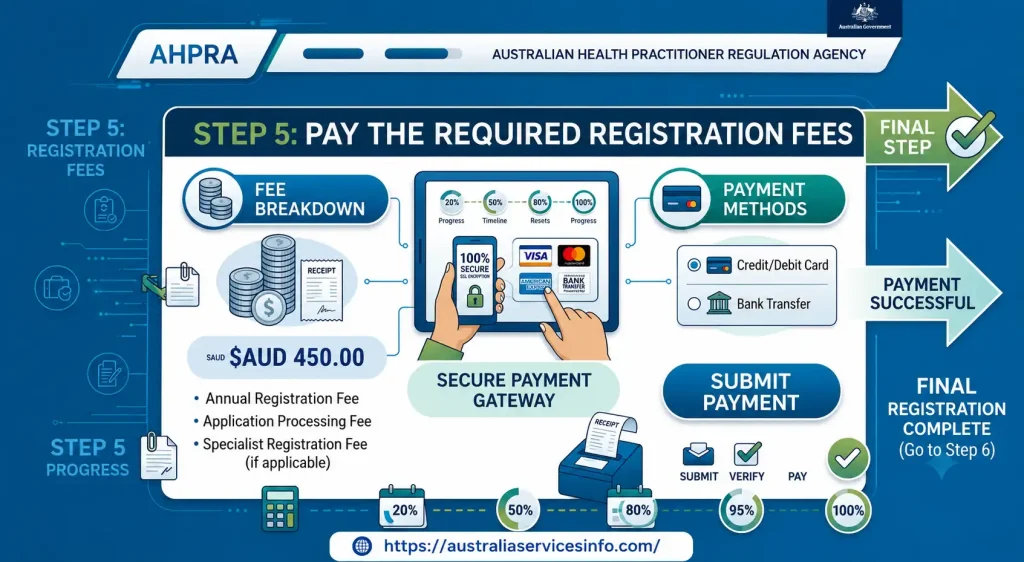
Most registration applications require payment before assessment begins. The applicable fee depends on your profession and registration category.
Step 6: Application Assessment
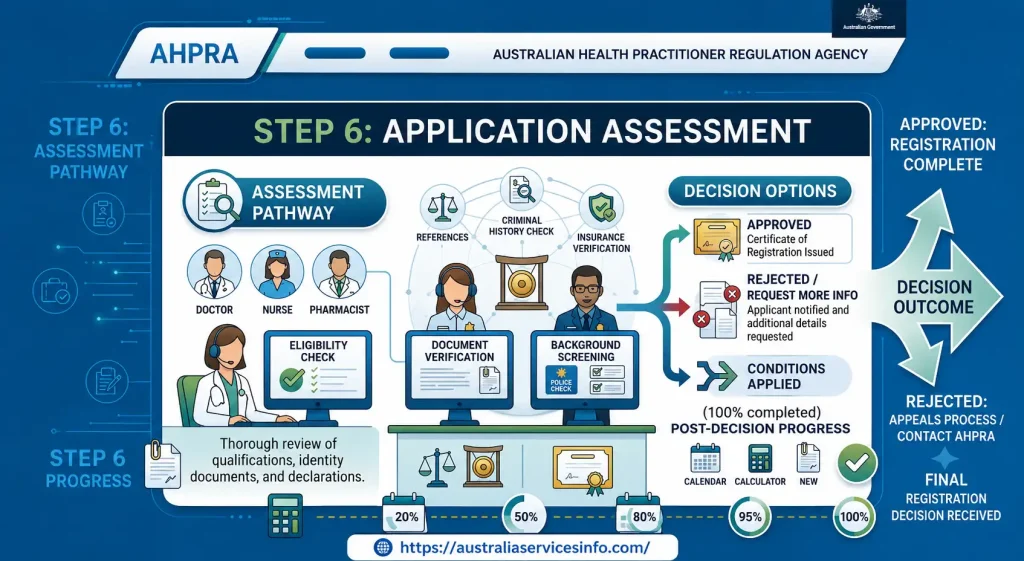
After submission, your application is assessed against the relevant registration standards. During this stage, additional information may be requested if clarification is needed.
Step 7: Receive Your Registration Outcome
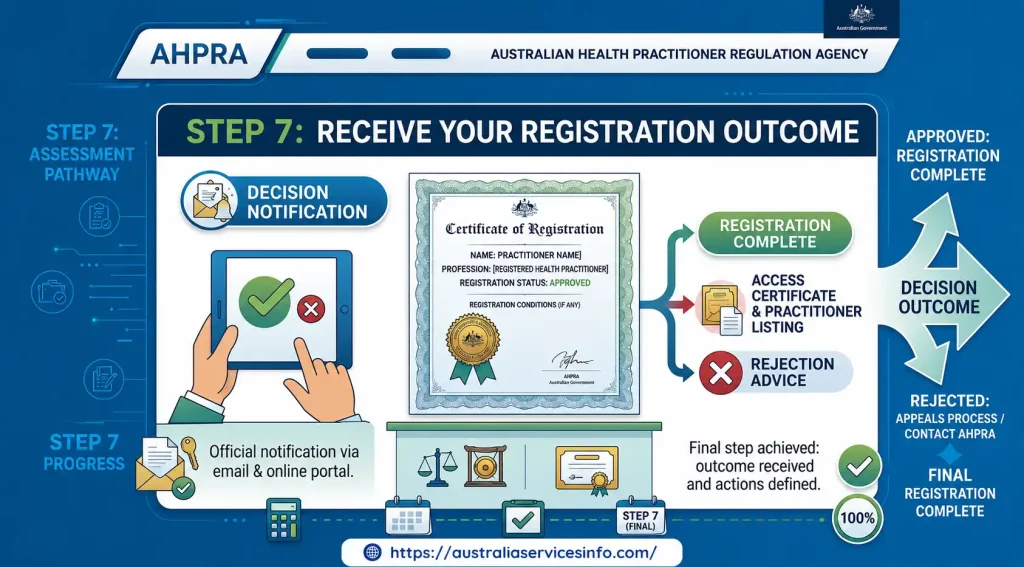
Once approved, your registration becomes active and your name is added to the public Register of Practitioners. You can then legally practise within the scope of your registration.
AHPRA Login Guide
Registered practitioners can manage most registration services through their secure online account. The portal allows users to monitor applications, renew registration, update contact information, and complete declarations.
Logging Into Your Account
The login process generally includes the following steps:
- Open the official registration check Australian Health Practitioner Regulation Agency portal.
- Select the login option.
- Enter your registered email address or username.
- Type your password.
- Complete any required security verification.
- Access your practitioner dashboard.
Once signed in, practitioners can view their registration details, renewal status, submitted applications, and important notifications.
How to Renew AHPRA Registration
Annual renewal is essential for maintaining legal authority to practise. Missing the renewal period can affect registration status and may prevent practitioners from working until registration is restored.
Renewal Process
Follow these steps during the renewal period:
- Sign in to your online account.
- Review your personal details.
- Update employment information if necessary.
- Complete the required declarations.
- Confirm continuing professional development requirements where applicable.
- Review professional indemnity insurance arrangements.
- Pay the renewal fee.
- Submit the renewal application.
After submission, confirmation is provided once the renewal has been processed.
Information You Can Update Online
Your practitioner account allows you to manage several personal details throughout the year.
Common updates include:
Keeping these details current helps ensure you receive important registration notices without delay.
AHPRA Registration Standards
Every registered practitioner must continue meeting professional standards throughout their career. These standards help maintain public confidence and support high-quality healthcare across Australia.
Registration standards commonly cover:
Failure to meet registration standards may affect registration eligibility or renewal.
Continuing Professional Development (CPD)
Continuing Professional Development helps practitioners maintain and improve their knowledge, clinical skills, and professional competence.
Depending on the profession, CPD activities may include:
Maintaining accurate CPD records is an important professional responsibility.
Professional Responsibilities
Registration brings ongoing responsibilities beyond simply holding a licence to practise.
Healthcare professionals should:
Meeting these responsibilities helps protect both patients and practitioners.
How to Verify AHPRA Registration
Patients, employers, educational institutions, and healthcare organisations can verify whether a practitioner is currently registered.
Registration verification is commonly used when:
The public register provides transparency and supports informed decision-making when selecting healthcare professionals.
Common Reasons Applications Take Longer
Although many applications are processed efficiently, some require additional assessment.
Common causes of delays include:
Common Mistakes to Avoid During Registration
Many registration delays happen because applicants overlook small but important details. Taking extra time to review your application before submission can save weeks of unnecessary processing.
Avoid these common mistakes:
A careful review before submission helps improve the chances of a smooth registration process.
Tips for a Faster AHPRA Application
Although assessment times vary depending on the profession and individual circumstances, applicants can help speed up the process by following a few best practices.
Helpful tips include:
Good preparation is often the biggest factor in reducing unnecessary delays.
Benefits of Being Registered with AHPRA
Holding registration check Australian Health Practitioner Regulation Agency provides more than legal authority to practise. It also demonstrates that a healthcare professional has met nationally recognised standards for education, competence, and professional conduct.
Some key benefits include:
Registration also encourages lifelong learning through continuing professional development and professional accountability.
When Should You Contact AHPRA?
Practitioners may need assistance at different stages of their professional journey. Contactingregistration check Australian Health Practitioner Regulation Agency can help resolve issues relating to applications, renewals, account access, or registration records.
Common situations include:
Having your registration details available before making an enquiry can help resolve matters more efficiently.
Frequently Asked Questions (FAQs)
Final Thoughts
AHPRA serves as the foundation of Australia’s healthcare regulatory framework, helping ensure that registered health practitioners meet consistent national standards throughout their careers. From initial AHPRA registration and annual renewal to professional development requirements and public registration checks, AHPRA provides a transparent system that supports both healthcare professionals and patient safety across Australia.
Whether you are starting your healthcare career, relocating to Australia as an internationally qualified practitioner, or renewing an existing AHPRA registration, understanding AHPRA requirements is essential. Meeting AHPRA registration standards, maintaining compliance with professional obligations, keeping your registration details current, and submitting accurate documentation can help you practise confidently while building a successful long-term healthcare career in Australia.
Read More
myGov Australia (2026): Complete Guide to Login, Services & Account Access
ImmiAccount Login Guide (2026): Complete Registration, Visa Application & Account Management Guide
Service NSW Guide (2026): MyServiceNSW Account, Licences, Rebates & Online Services